


Lots of men experience erectile dysfunction after prostate surgery. The trouble is, prostate surgery typically follows prostate cancer, and when the C-word is talked about, afll other implications become side conversations. Fast forward to now, and you're potentially in a position where the catheter is out, the incisions have healed, and those side conversations about ED are foremost in your mind.
Men are often told that ED is something to be addressed after the surgery, and it is, but that doesn't stop you from having questions. So, we've put together the honest version of what to expect, covering everything in a helpful order.
Erections don't fail after a radical prostatectomy because the operation went badly; they fail because of an injury the operation can't fully avoid even in the best hands, and that injury recovers on a timetable measured in months rather than weeks. Three weeks of nothing isn't a verdict. It's close to what the biology predicts.
This guide covers why this happens, the real numbers, how long the window runs, what penile rehabilitation means and what it's for, and what's worth doing this week. If you have a partner, they may benefit from reading this too, since anything related to intimacy is worth being open about.
Why Does Erectile Dysfunction After Prostatectomy Happen, Even When the Surgery Went Well?
Erectile dysfunction after prostatectomy is a nerve injury rather than a blood flow failure. The cavernosal nerves that trigger an erection run in a thin bundle along the outer surface of the prostate, close enough that removing one disturbs the other. Even a technically excellent nerve-sparing operation, meaning one where the surgeon works to preserve those nerves rather than remove them, still stretches, compresses, and inflames them. They are not cut. They are stunned.
The clinical word for that state is neurapraxia: conduction stops, but the nerve itself remains viable. Recovery varies because surgical nerve injury can range from temporary neurapraxia to more substantial injury. Usually, the wiring is intact, but the signal is offline.
This is the part that almost nobody explains at discharge, and it's the answer underneath most of the questions men actually have. If the nerves were spared, why is nothing working? Because sparing a nerve means leaving it in place rather than leaving it undisturbed, and the bundle is thinner than a strand of thread and lies directly against the tissue being removed, so traction and heat reach it no matter how careful the dissection is.
There's a second consequence, and it matters more than it sounds. Nocturnal erections stop too. Healthy erectile tissue is oxygenated several times a night by erections you never notice, and when the signal goes quiet, that oxygen supply goes quiet with it. The tissue is now sitting in a low-oxygen state for months rather than hours, which is where the case for rehabilitation begins.
One clarification is worth making early: erection, penile sensation, and orgasm are related but not identical functions. The cavernosal nerves are essential for the erectile response, while penile sensation travels mainly through somatic nerves, and orgasm can remain possible even when erections are not yet reliable. There can be changes post-surgery; orgasmic intensity or timing may still change, and the ejaculate is gone permanently, since the prostate and seminal vesicles produced it. They're changes, not malfunctions.
What Are the Real Numbers?
The most important number here is not how many men develop erectile dysfunction after prostate surgery. It is whether the nerves on both sides were preserved, because that single fact separates two entirely different prognoses. Erectile dysfunction rates are around 43% following nerve-sparing surgery, against 92% where the nerves are not spared.
Those figures are very important, because the gap between them is the honest headline of this article. Nerve-sparing surgery isn't a guarantee of recovery, and non-nerve-sparing surgery is close to a certainty of long-term dysfunction. If you don't know which operation you had, that's the first question to ask.
Recovery figures point the same way, and a 2009 meta-analysis reported that the overall recovery rate was 58%, rising to 77% in men under 60. Age is doing real work in that difference. Younger age is an independent predictor of erectile-function recovery after prostatectomy, alongside baseline erectile function, comorbidity burden, and the extent of nerve preservation. Many of the studies in the 2009 meta-analysis predate today's robotic techniques, but robotic surgery does not produce one universal recovery rate. In a recent multicenter robotic cohort, 34% of men with adequate preoperative erectile function recovered erectile function by 12 months; outcomes varied substantially by age, baseline function, nerve preservation, and surgeon.
And “recovery” is defined differently by different research groups, some meaning erections firm enough for penetration and others meaning a return to a validated questionnaire score, which is how two papers can describe similar men and appear to disagree. When a surgeon quotes a percentage, it's fair to ask which definition sits behind it.
What no percentage can tell you is which side of it you land on. Bilateral nerve-sparing, unilateral nerve-sparing, and non-nerve-sparing surgery produce meaningfully different outcomes, and age, erectile function before surgery, and cardiovascular health each move the individual number further in one direction or the other. Population statistics describe a crowd, but you're one man standing in it with a unique experience.
How Long Does Recovery Actually Take?
Recovery is measured in months and often in years, not weeks. Cavernosal nerve function typically recovers over a period of 6 to 24 months, and improvement across that window is uneven rather than steady. Most men see nothing meaningful for the first several months, and that silence is expected rather than predictive.
Recovery is not linear or uniform. Erectile function commonly falls sharply after surgery and may improve gradually, intermittently, or only after a prolonged period; an absence of obvious progress at one early time point does not reliably determine the eventual outcome.
| TIME SINCE SURGERY | WHAT IS TYPICALLY HAPPENING | WHAT DOES IT MEAN |
| Weeks 0 to 6 | Surgical healing and continence work begin. Erectile function is commonly absent or markedly reduced. | A lack of erections at this stage alone is too early to determine the final outcome. |
| Months 2 to 6 | Partial tumescence or medication-assisted responses may occur, especially after bilateral nerve-sparing surgery, but many men still have no usable erections. | No response yet is common and does not rule out later recovery. |
| Months 6 to 12 | Measurable improvement may begin to emerge. Some men regain partial spontaneous erections or become more responsive to treatment. | Recovery often remains incomplete and the expected window commonly extends into the second year. |
| Months 12 to 24 | Further gradual recovery is possible, and durable erectile outcome is often assessed across this interval rather than at a single early visit. | Recovery after 24 months is less common on average, but it is not impossible. |
A note of caution on that 6 to 24 month figure, because the same two numbers turn up elsewhere describing something entirely different. Radiation-related erectile dysfunction has an onset window with identical math, and the process behind it runs the opposite way: nerves recovering after surgery, against tissue slowly deteriorating after radiation. The time windows can look similar, but the biology is different: after surgery, the focus is recovery from nerve injury; after radiation, erectile dysfunction may emerge gradually as vascular, neural, and fibrotic effects accumulate. There are many different treatments that can result in ED ,but if you had radiation as well as surgery, you should raise that distinction specifically with the team treating you.
What Is Penile Rehabilitation, and Does It Work?
Penile rehabilitation is the practice of deliberately producing blood flow into the penis during the months when the nerves cannot do it themselves. The goal is not to restore erections now. It is to keep the tissue healthy enough to work later, once the nerve signal returns.
The reasoning rests on what happens to unused erectile tissue. Sustained cavernosal hypoxia drives the replacement of smooth muscle with collagen, a process called corporal fibrosis. Smooth muscle relaxes and expands on demand; collagen does neither. So a penis that goes many months without oxygenation can end up structurally less capable of an erection than it was on the day of surgery, independent of how well the nerves eventually recover, which is what turns the waiting from neutral time into something with a cost attached.
That's the race rehabilitation is trying to win. The nerves need 6 to 24 months to come back, and the tissue needs to still be in usable condition when they do. Clinicians describe the rehabilitation window, typically the first 6 to 12 months after surgery, as the period where this matters most.
Two approaches dominate, and they work on completely different principles. The first is a PDE5 inhibitor, the drug class that includes sildenafil and tadalafil, and here is the catch: a PDE5 inhibitor does not create an erection; it amplifies the signal the body is already sending. Where the nerve signal is the damaged part, there's less for the drug to amplify, which is why men are often disappointed by the first prescription and conclude the medication has failed. It hasn't failed. It's waiting for something to work with; in broad ED populations, PDE5 inhibitors help roughly 60 to 70% of men, whereas a systematic review of sildenafil after radical prostatectomy found that only a little more than one-third achieved erections sufficient for intercourse.
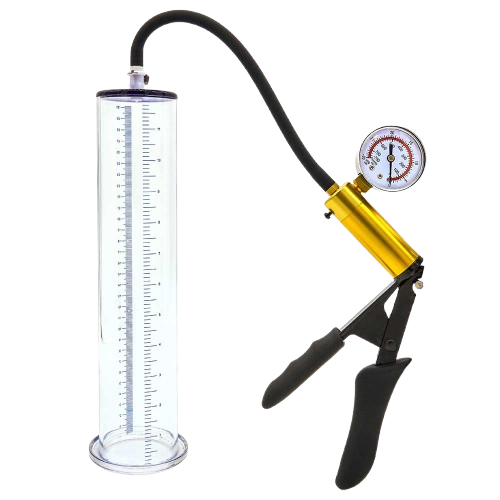
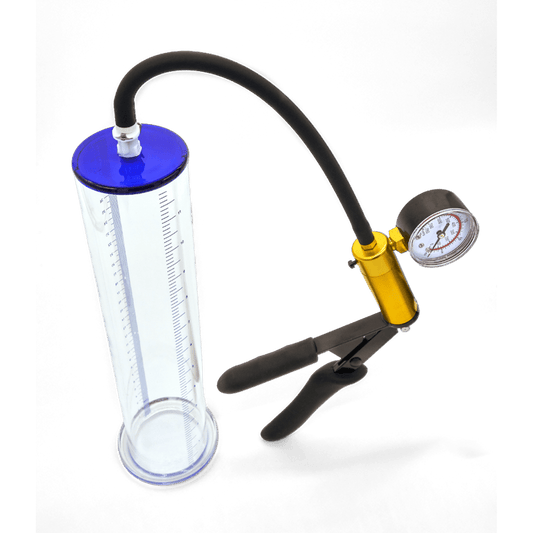
The second approach doesn't need a nerve signal at all. A vacuum erection device produces an erection through mechanical negative pressure, requiring no nerve function, no hormonal input, and no medication. That independence is precisely why it appears in rehabilitation protocols during the months when nothing else has anything to act on. There's also evidence on length: men who begin VED use within the first few weeks after surgery retain more length than those who take no action.
In a rehabilitation protocol, the device is used daily for 10 to 15 minutes without a constriction ring, which is a different activity from using it for intercourse. Two safety points aren't optional, and they come from the FDA labeling rather than from clinical preference
- Never fall asleep while wearing the constriction ring
- Allow at least 60 minutes between uses

Now the honest part. The trial evidence that rehabilitation improves long-term spontaneous erectile function is genuinely mixed, and the strongest claims made for it outrun what the randomized data supports. The tissue-preservation rationale is strong. Whether any particular protocol changes the outcome at two years is less settled than most pages imply, and you deserve to hear that from a page rather than from people talking about mixed experiences on a forum.
What Can You Do Right Now?
Three things are worth doing in the next two weeks, and none of them require a decision about treatment. Find out exactly what was done to your nerves. Get the erectile question onto the agenda with the surgical team rather than leaving it to whenever the next routine appointment lands. And treat the timeline as information rather than as a countdown.
Start with the operative note. The words to look for are bilateral nerve-sparing, unilateral nerve-sparing, or non-nerve-sparing, and which of the three appears there changes the outlook more than anything else on this page. Many men never learn which one applies to them. Ask directly, and ask for it in writing if the answer arrives verbally, because it's worth being able to check the wording again in six months when the question stops feeling academic.
Then ask when you can begin. Rehabilitation is commonly discussed once the catheter is out and the surgeon has confirmed that healing permits it. Some studies suggest that starting PDE5-inhibitor therapy earlier (often soon after catheter removal) may improve erectile-function recovery compared with waiting several months, but the evidence does not establish one universally optimal start date or protocol. The surgeon's clearance is the actual gate, though; nothing on the internet, including this page, overrides it.
There's one more thing worth naming, because men consistently don't raise it. The psychological weight of this period is real, and it is not a character weakness to be flattened by it. In a study of radical prostatectomy survivors, 16.2% screened positive for current mental distress; urinary problems, sexual change, relationship strain, and the cancer experience can all add to that burden. If it's affecting your sleep, your appetite, or your relationship, that belongs on the same agenda as the erectile question. Same appointment. Same seriousness.
What you don't need to do is make a treatment decision this week. The full range of options, from medication through devices to injections and surgical implants, remains available at month twelve and beyond, and choosing early isn't rewarded. Our article, Erectile Dysfunction: Causes, Treatments, and Recovery: The Complete Guide, sets out the whole landscape when you're ready to look at it.

What This Means for You and Your Partner
Erectile dysfunction after prostate surgery is a recovery problem, not evidence that desire or intimacy has disappeared. The nerves that trigger an erection can take months to recover, and that gap is easy for both partners to misread.
Silence is understandable. One person may pull back to avoid pressure or the feeling of failure; the other may avoid asking because they do not want to make things worse. But when nobody names what has changed, the physical problem can start to feel like a relationship problem. Less open communication about sexual changes after prostate cancer treatment is associated with greater relationship distress.
There is also the matter of what stays intact. Sensation, arousal, and the capacity for orgasm are often preserved after prostatectomy even when erections are not. Orgasms may be dry or feel different, but an unreliable erection does not mean intimacy has to be suspended until recovery is complete.
Say the timeline out loud together: “The nerves may be recovering slowly. This is not about whether I want you.” It is a small conversation, but it can stop uncertainty from becoming a story about the relationship.
Frequently Asked Questions
-
Will I ever be able to have sex again after prostate cancer surgery?
For most men, yes, though the route there varies and the timeline is long. Nerve recovery runs over 6 to 24 months, and treatments exist at every stage in the meantime, including options that work without any nerve signal at all. Sensation and orgasm usually survive surgery even while erections do not.
-
What percentage of men regain erectile function after prostatectomy?
It depends heavily on whether the nerves were spared. One meta-analysis reported that the overall recovery rate was 58%, rising to 77% in men under 60. Rates are substantially lower where the nerves could not be preserved. Age, erectile function before surgery, and cardiovascular health all influence the individual outcome considerably.
-
Can you get an erection without a prostate?
Yes. The prostate produces seminal fluid and plays no mechanical role in producing an erection. Erections depend on the cavernosal nerves and on blood flow, both of which sit outside the prostate itself. Those nerves run alongside the gland, however, so surgery to remove it commonly disrupts them temporarily.
-
How long does erectile dysfunction last after prostatectomy?
Cavernosal nerve function typically recovers over a period of 6 to 24 months, and improvement across that window arrives unevenly rather than steadily. Most men notice little change in the first several months. An absence of progress early in recovery carries no prognostic weight, and change beyond the first year remains possible.
-
Does nerve-sparing surgery guarantee recovery?
No. Nerve-sparing surgery preserves the nerve bundles rather than protecting them from injury, and the dissection still stretches and inflames them. Erectile dysfunction rates are around 43% following nerve-sparing surgery, compared with 92% where the nerves are not spared. Sparing improves the odds considerably without guaranteeing the outcome.
-
The Endurance Pro Manual Vacuum Pump
Learn MoreRegular price $75.99 - $106.99Unit price per -
ED Support Kit
Learn More$43.99 Regular price -
Champion+ Vacuum Erection Device Kit
Learn More$74.99 Regular price$157.99Sale priceRegular price $74.99Unit price perSale



Where This Leaves You
For a lot of men, the question of “is this going to come back, or is this who I am now?” is the one that's driving the search for information on ED following prostate surgery. The honest answer is, it's likely too early to know, but it's important you understand that answer isn't a way of dodging the question. “Too early to know” usually means you've still got an open recovery window.
Two things are worth carrying out of this page. The first is that nothing happening right now is the expected course of a nerve injury, not the final outcome of one. The second is that there's a real job to do while the nerves recover, and it's about keeping tissue viable rather than about forcing an erection that the biology can't yet produce.
Ask which nerve-sparing status applies to you. Ask when you're cleared to begin. If possible, bring your partner into the timeline to avoid any awkward silence. We have a full guide on how erections work that explains the underlying mechanism for anyone who wants the full picture, but the most important number tonight isn't in anything you'll read online: it's the one about your own operation, so talking openly and honestly to the doctor overseeing your care is always going to be a good next step.
References:
Kyriazis I, Spinos T, Tsaturyan A, Kallidonis P, Stolzenburg JU, Liatsikos E. “Different Nerve-Sparing Techniques during Radical Prostatectomy and Their Impact on Functional Outcomes.” Cancers (Basel), 2022. https://pmc.ncbi.nlm.nih.gov/articles/PMC8996922/
Lin CS, Lue TF. “Molecular Pathogenesis and Treatment of Cavernous Nerve Injury-Induced Erectile Dysfunction.” Frontiers in Physiology, 2022. https://www.frontiersin.org/journals/physiology/articles/10.3389/fphys.2022.1029650/full
Capogrosso P, Ventimiglia E, Cazzaniga W, Montorsi F, Salonia A. “Orgasmic Dysfunction after Radical Prostatectomy.” World Journal of Men's Health, 2017. https://pmc.ncbi.nlm.nih.gov/articles/PMC5419114
Curmi A, Debattista J, Busuttil G, et al. "A Systematic Review of the Effects of Nerve Sparing during Radical Prostatectomy." Malta Medical Journal, 2025. https://mmsjournals.org/index.php/mmj/article/view/803
Tal R, Alphs HH, Krebs P, Nelson CJ, Mulhall JP. “Erectile Function Recovery Rate after Radical Prostatectomy: A Meta-Analysis.” The Journal of Sexual Medicine, 2009. https://pmc.ncbi.nlm.nih.gov/articles/PMC4097184/
Briganti A, Gallina A, Suardi N, et al. “Predicting Erectile Function Recovery after Bilateral Nerve Sparing Radical Prostatectomy: A Proposal of a Novel Preoperative Risk Stratification.” The Journal of Sexual Medicine, 2010. https://pubmed.ncbi.nlm.nih.gov/20487236/
Moskowitz D, et al. “Recovery of Erectile Function in Men Undergoing Robotic-Assisted Radical Prostatectomy Is Associated with Surgeon Performance.” European Urology, 2025. https://www.renalandurologynews.com/news/recovery-of-erectile-function-in-men-undergoing-prostatectomy-tied-with-surgeon-performance
Whalen M, et al. “Preventing Erectile Dysfunction after Radical Prostatectomy.” In: Erectile Dysfunction: Current and Emerging Therapies. IntechOpen, 2018. https://www.intechopen.com/chapters/62729
Lee JK, et al. “Unexpected Long-term Improvements in Urinary and Erectile Function in Men with Erectile Dysfunction and Urinary Incontinence at 12 Months After Radical Prostatectomy.” European Urology, 2015. https://pmc.ncbi.nlm.nih.gov/articles/PMC4605865/
El-Sakka AI. “Reversion of Penile Fibrosis: Current Information and a New Horizon.” Arab Journal of Urology, 2011. https://pmc.ncbi.nlm.nih.gov/articles/PMC4149188/
Mulhall JP, et al. “Penile Rehabilitation Following Radical Prostatectomy.” Current Opinion in Urology, 2015. https://pmc.ncbi.nlm.nih.gov/articles/PMC4708129/
Lowe G, Bahnson R. “Non-invasive Management of Primary Phosphodiesterase Type 5 Inhibitor Failure in Patients with Erectile Dysfunction.” Therapeutic Advances in Urology, 2009. https://pmc.ncbi.nlm.nih.gov/articles/PMC3126073/
U.S. Food and Drug Administration. "External Penile Rigidity Devices — Class II Special Controls Guidance Document for Industry and FDA Staff." FDA (Center for Devices and Radiological Health), 2004. https://www.fda.gov/medical-devices/guidance-documents-medical-devices-and-radiation-emitting-products/external-penile-rigidity-devices-class-ii-special-controls-guidance-document-industry-and-fda-staff
Lehrfeld T, Lee DI. “The Role of Vacuum Erection Devices in Penile Rehabilitation after Radical Prostatectomy.” International Journal of Impotence Research, 2009. https://pubmed.ncbi.nlm.nih.gov/19225465/
Köhler TS, Pedro R, Hendlin K, Utz W, Ugarte R, Reddy P, et al. “A Pilot Study on the Early Use of the Vacuum Erection Device after Radical Retropubic Prostatectomy.” BJU International, 2007. https://pubmed.ncbi.nlm.nih.gov/17657210/
Raina R, Agarwal A, Ausmundson S, Lakin M, Nandipati KC, Montague DK, et al. “Early Use of Vacuum Constriction Device Following Radical Prostatectomy Facilitates Early Sexual Activity and Potentially Earlier Return of Erectile Function.” International Journal of Impotence Research, 2006. https://pmc.ncbi.nlm.nih.gov/articles/PMC4708600/
Philippou YA, Jung JH, Steggall MJ, O'Driscoll ST, Bakker CJ, Hacking N, et al. “Penile Rehabilitation for Postprostatectomy Erectile Dysfunction.” Cochrane Database of Systematic Reviews, 2018; updated evidence page accessed 2025. https://www.cochrane.org/evidence/CD012414_penile-rehabilitation-post-prostatectomy-erectile-dysfunction
Chung E, Gillman M, et al. “Current Mental Distress Among Men with a History of Prostate Cancer Treatment: Associations with Urinary, Sexual, and Relationship Factors.” American Journal of Men's Health, 2020. https://journals.sagepub.com/doi/10.1177/1557988320957535
Wittmann D, Carolan M, Given B, Skolarus TA, Crossley H, An L, et al. “What Couples Say about Their Recovery of Sexual Intimacy after Prostatectomy: Toward the Development of a Conceptual Model of Couples' Sexual Recovery after Surgery for Prostate Cancer.” The Journal of Sexual Medicine, 2015. https://pmc.ncbi.nlm.nih.gov/articles/PMC4373522/
