


Most men are told to expect erectile dysfunction after prostatectomy. Fewer are told that the erectile tissue itself starts to change shape during the recovery months, not because the surgery damaged it, but because of the long stretch of time it spends without erections afterward. That's the part rehabilitation programs exist to prevent, and it's why clinicians treat the timeline as a treatment window rather than a suggestion.
The distinction is significant. Erectile dysfunction after prostate surgery is common, and erectile dysfunction rates are around 43% following nerve-sparing surgery, compared with 92% where the nerves are not spared. Nerve injury is its own topic with a range of possible outcomes, but fibrosis is something different, and without attention, it has the potential to be its own kind of unique problem.
This article covers the mechanism: what fibrosis is, why erectile tissue changes when erections stop, what those changes do to an erection, and why the timing of what happens next isn't an arbitrary clinical preference.
What Is Penile Fibrosis After Surgery?
Penile fibrosis after surgery, often called corporal fibrosis, is the loss of normal cavernosal smooth muscle and an increase in collagen within the corpora cavernosa, the two erectile chambers that run along the penis. Collagen is firmer and less elastic than healthy smooth muscle. As collagen increases and smooth muscle declines, erectile tissue may become less able to expand, fill with blood, and maintain the pressure needed for a firm erection.
After prostate surgery, injury to the cavernous nerves can reduce spontaneous and sexual erections during recovery. A prolonged reduction in erectile activity is associated with lower cavernosal oxygen levels, and evidence suggests that hypoxia-related (lack of oxygen) signaling can promote collagen production and smooth-muscle loss.
To be clear, corporal fibrosis is not Peyronie’s disease, although the two often get confused. Peyronie’s disease is an acquired fibrotic disorder of the ‘tunica albuginea’ (the tough sheath surrounding the corpora cavernosa). It is typically associated with a discrete plaque and can cause penile curvature, indentation, shortening, pain, and/or erectile dysfunction.
On the other hand, corporal fibrosis involves tissue within the erectile chambers. It may not create a palpable external plaque or visible curvature, and it may first present as declining erection firmness or difficulty maintaining an erection. However, symptoms alone are not always enough to determine whether fibrosis is present or distinguish it from Peyronie’s disease, venous leak, persistent neurogenic ED, or other causes of poor erections.

Why Does Fibrosis Happen After Prostate Surgery?
Fibrosis develops because erectile tissue stops being oxygenated. Erections are how oxygen-rich blood reaches the smooth muscle inside the corpora cavernosa, the two erection chambers running the length of the penis, and the nerves that trigger them run directly alongside the prostate. When surgery injures those nerves, spontaneous and nighttime erections stop, and sustained cavernosal hypoxia drives the replacement of smooth muscle with collagen, a process called corporal fibrosis.
The oxygen difference is larger than most people expect. Flaccid erectile tissue sits at roughly 25 to 40 mmHg of oxygen tension, while an erection lifts it close to arterial levels. Healthy tissue moves between those two states several times a day and night. Tissue that has lost its erections doesn't. It stays at the low end.
Sustained hypoxia changes what the tissue manufactures. It upregulates transforming growth factor beta 1, or TGF-beta1, a signaling protein that instructs cells to lay down collagen, while cavernosal smooth muscle cells die off through apoptosis at the same time. Muscle is lost. Collagen fills the space, and what remains is stiffer and less able to expand.
And the process feeds itself. Less smooth muscle produces weaker erections, weaker erections deliver less oxygen, and less oxygen drives further collagen deposition.
That's what makes the timing urgent rather than merely unfortunate. Whether you’re a man who has had nerve-sparing surgery and are expecting nerve recovery over the next 6 to 24 months, or you’re a man who’s had non-nerve-sparing surgery and you’re looking at treatments to help with erectile function longer term, the condition of the tissue in the penis is still going to play an important part.
What Nocturnal Erections Were Doing for You
You will not have noticed them, because they happen while you sleep. Healthy men typically produce about 3 to 5 erections per night during REM sleep, each lasting roughly 15 to 40 minutes. That is hours of oxygenation every week, delivered with no conscious effort, for decades. Nerve injury removes it silently. That is the single largest change to the tissue's oxygen supply after surgery.
What Does Fibrosis Actually Do to an Erection?
Fibrosis breaks the mechanism that holds blood in. An erection depends on the erectile chambers expanding until they press the small draining veins against the surrounding sheath, sealing blood inside under pressure. Fibrotic tissue cannot expand far enough to close that seal. Blood arrives, and then it leaves.
The structure being lost is the sinusoidal architecture: a honeycomb of small blood spaces separated by smooth muscle that relaxes and fills on demand. Replace enough of that muscle with collagen and the honeycomb stiffens, and clinicians call the result corporal veno-occlusive dysfunction, which is the formal name for blood that arrives but won't stay.
This explains something men often discover for themselves and find alarming. PDE5 inhibitors work by amplifying a signal the body is already producing, not by generating an erection from nothing. They depend not only on nitric oxide signaling but also on adequate blood flow into the penis and an intact mechanism for trapping blood there. When penile vascular disease is more severe, particularly when there is both poor arterial inflow and impaired blood trapping, response to sildenafil is less likely. A pill that stops working is not always a sign that the dose is wrong; it can also be a sign that the underlying cause of ED has changed or progressed.
Penile length can also change after prostate surgery, and it is often one of the first concerns men raise. Loss of cavernosal smooth muscle and increased collagen may contribute to reduced tissue elasticity and penile shortening, but they are not the only possible explanation. After radical prostatectomy, studies have documented changes in stretched flaccid penile length, and erectile-function recovery is associated with better recovery of length over time.
Is Penile Fibrosis Reversible?
Partly, and the part that matters most is preventable rather than reversible. Early hypoxic change can be limited or halted if oxygenation is restored while the smooth muscle is still there. Established collagen replacement is not readily reversed by any treatment in routine clinical use.
That's a graded answer rather than a yes or a no, and the grading is the useful part.
Fibrosis isn't an event that happens on a particular day. It's a trajectory, and where you sit on it determines what is still available to you. In the first weeks of recovery after surgery , there's very little collagen deposited and a great deal of smooth muscle still worth protecting, while months into an unbroken stretch without erections, the balance has already begun to move. Years in, it has moved a long way.
So the honest framing isn't whether this can be undone. It's how much is still here to keep. Research into antifibrotic and regenerative approaches is active, and none of it has yet displaced the simpler point that tissue kept oxygenated doesn't scar in the first place.
Two things follow from that. Nobody should be told the outcome is already decided, particularly in the first months after surgery. And nobody should be told there's no hurry.
Why Rehabilitation Shouldn’t Wait
Rehabilitation exists to keep erectile tissue oxygenated during the months when it cannot oxygenate itself. It is not thought to speed nerve recovery. It preserves the tissue that the returning nerves will need to work with, which is what makes it time-sensitive: the rehabilitation window, typically the first 6 to 12 months after surgery, is when most of the preventable change happens.
Erectile tissue also responds to being stretched and filled with blood. Regular erections, or treatments that safely create a similar effect, may help maintain the tissue’s flexibility and limit changes linked with scarring. In simple terms, the goal is to keep the erectile chambers active while recovery is underway.

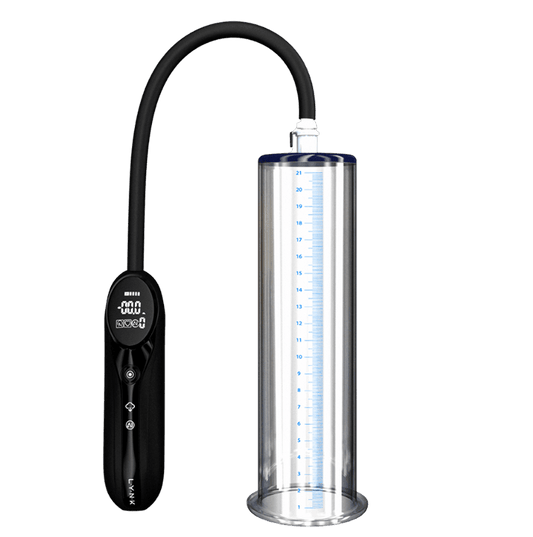
The clearest evidence for acting early is length preservation, because length is measurable. Men who begin vacuum erection device (VED) use within the first few weeks after surgery retain significantly more length than those who take no action, and in a randomized pilot, daily VED use beginning within one month after surgery maintained stretched penile length at six months. Our guide that looks at how vacuum erection device therapy works explains the mechanism behind that.
On when to start, be guided by your surgeon rather than by any article you read. Common penile rehabilitation practice is to begin once the catheter is out, and the surgical team has given clearance, which reflects caution about healing rather than a start date established by trial. The direction of the evidence is clear even where the date isn't. Earlier beats later. Later beats not at all.
Frequently Asked Questions
-
How to heal penile fibrosis?
Established fibrosis cannot be reliably reversed, so care focuses on preventing further loss and managing the effects of what is already there. Restoring regular oxygenation to the tissue is the main preventive measure. Where fibrosis is advanced, treatment shifts toward options that do not depend on the tissue expanding normally. A urologist can assess which applies.
-
Is penile fibrosis the same as Peyronie's disease?
No. Peyronie's disease is a localized plaque in the sheath around the erectile chambers, producing curvature and often a lump that can be felt. Corporal fibrosis after surgery is diffuse scarring inside the chambers themselves, with no lump and no curve. The two have different causes, different symptoms, and different treatments.
-
Does everyone get penile fibrosis after prostate surgery?
No. Fibrosis is a risk that rises the longer erectile tissue goes without oxygenation, not an automatic consequence of having had surgery. Men who recover erections quickly, or who maintain oxygenation during recovery, may develop little or none of it. The risk follows a trajectory, and that trajectory can be changed.
-
Can you feel penile fibrosis?
Usually not, at least not directly. Unlike Peyronie’s disease, corporal fibrosis produces no discrete lump and is rarely painful. It tends to be noticed indirectly, through erections that are harder to achieve, harder to maintain, or less rigid than they used to be, and sometimes through a change in length.
-
Does penile fibrosis affect implant surgery later?
It can. Extensive corporal fibrosis makes penile implant surgery technically harder and may affect the size of the device that can be placed. Outcomes remain good in experienced hands. It is one more reason to protect the tissue early, and one worth raising directly if implants are being discussed.
-
The Overdrive Automatic Vacuum Pump
Learn More$79.99 Regular price -
Electric Endurance Pro Automatic Vacuum Pump
Learn MoreRegular price $95.99 - $119.99Unit price per -
ED Support Kit
Learn More$43.99 Regular price




What Should You Do Now?
The practical answer is short: Ask your surgical team when you're cleared to begin rehabilitation, and ask specifically rather than waiting to be offered it. Many men are never told this part of recovery exists. Begin when you're cleared, not when erections return, because waiting for erections to return means waiting for the very thing the tissue needs in order to stay healthy.
The window is real; it is measured in months rather than weeks, and what happens inside it matters more than what happens after it closes.
If there's one idea to take from this page, it's this. Nerve recovery and tissue preservation are two separate problems running on two separate clocks. The first is largely out of your hands; the second isn’t.
References:
Busuttil G, Goh D, Dale R, et al. "A Systematic Review of the Effects of Nerve Sparing during Radical Prostatectomy." Malta Medical Journal, 2025. https://mmsjournals.org/index.php/mmj/article/view/803
Iacono F, Giannella R, Somma P, Manno G, Fusco F, Mirone V. "Histological alterations in cavernous tissue after radical prostatectomy." The Journal of Urology, 2005. https://www.auajournals.org/doi/abs/10.1097/01.ju.0000154356.76027.4f
Ferrini MG, Kovanecz I, Sanchez S, Umeh C, Rajfer J, Gonzalez-Cadavid NF. "Fibrosis and loss of smooth muscle in the corpora cavernosa precede corporal veno-occlusive dysfunction (CVOD) induced by experimental cavernosal nerve damage in the rat." The Journal of Sexual Medicine, 2009. https://pmc.ncbi.nlm.nih.gov/articles/PMC2756287/
Gómez Varela C, Mateos Yeguas LA, Couto Rodríguez I, Durán Vila MD. "Penile Doppler Ultrasound for Erectile Dysfunction: Technique and Interpretation." American Journal of Roentgenology, 2020. https://www.ajronline.org/doi/10.2214/AJR.19.22141
El-Sakka AI. "Reversion of penile fibrosis: Current information and a new horizon." Arab Journal of Urology, 2011. https://pmc.ncbi.nlm.nih.gov/articles/PMC4149188/
Park J-K, Moreland RB, Nehra A. "The Role of Oxygen Tension in Penile Erection and Its Relationship to Erectile Dysfunction." TheScientificWorldJOURNAL, 2004. https://pmc.ncbi.nlm.nih.gov/articles/PMC5956296/
Luo PY, Zou JR, Chen T, Zou J, Li W, Chen Q, Cheng L, Zheng LY, Qian B. "Autophagy in erectile dysfunction: focusing on apoptosis and fibrosis." Asian Journal of Andrology, 2025. https://pmc.ncbi.nlm.nih.gov/articles/PMC11949458/
Whalen M. "Preventing Erectile Dysfunction after Radical Prostatectomy: Nerve-Sparing Techniques, Penile Rehabilitation, and Novel Regenerative Therapies." In: Prostatectomy (ed. Genadiev T). IntechOpen, 2019. https://www.intechopen.com/chapters/62729
Andersen ML, Tufik S. "The role of sleep stages in the regulation of erectile function: impacts of REM sleep fragmentation." International Journal of Impotence Research, 2026. https://www.nature.com/articles/s41443-026-01240-9
Lowe G, Bahnson R. "Non-invasive management of primary phosphodiesterase type 5 inhibitor failure in patients with erectile dysfunction." Therapeutic Advances in Urology, 2009. https://pmc.ncbi.nlm.nih.gov/articles/PMC3126073/
Gurkan L, Mulhall JP. "Penile change following radical prostatectomy: size, smooth muscle atrophy, and curve." Current Urology Reports, 2008. https://pubmed.ncbi.nlm.nih.gov/18947515/
Vasconcelos JS, Figueiredo RT, Nascimento FL, et al. "The natural history of penile length after radical prostatectomy: a long-term prospective study." Urology, 2012. https://pubmed.ncbi.nlm.nih.gov/23102441/
Gandaglia G, Suardi N, Cucchiara V, Bianchi M, Shariat SF, Roupret M, Salonia A, Montorsi F, Briganti A. "Penile rehabilitation after radical prostatectomy: does it work?" Translational Andrology and Urology, 2015. https://pmc.ncbi.nlm.nih.gov/articles/PMC4708129/
Dalkin BL, Christopher BA. "Preservation of penile length after radical prostatectomy: early intervention with a vacuum erection device." International Journal of Impotence Research, 2007. https://pubmed.ncbi.nlm.nih.gov/17657210/
Köhler TS, Pedro R, Hendlin K, et al. "A pilot study on the early use of the vacuum erection device after radical retropubic prostatectomy." BJU International, 2007. https://pubmed.ncbi.nlm.nih.gov/17822466/
