


As you age, you realize changes to your body rarely happen overnight. Instead, for most men past 60, things have changed slowly, and the same is true of erections. Over months, or even years, they can become less firm, slower to arrive, or fade before intimacy is finished.
Since there’s often no single event to point to, and no surgery or diagnosis that has inspired it, this gradual change is generally referred to as “age-related erectile dysfunction.” As a result, many men simply take that name at face value. However, an honest look at the condition is more useful: Erections do change as men get older, but those changes are driven by specific factors, and most of those factors can be treated or managed.
If you’ve ever wondered if changes to erectile function are just part of getting older, or if you’ve raised it with a doctor and had your concerns brushed off, this guide is written for you. We’ll explain exactly what is happening inside the body, why it’s rarely one single cause, and what genuinely helps.
Is Erectile Dysfunction Just a Normal Part of Aging?
No. Erectile dysfunction becomes more common with age, but it is not a normal or inevitable part of aging by itself. It is caused by health conditions that grow more frequent over time, such as vascular disease, diabetes, and gradual hormonal change. Age raises the odds, but it is the underlying conditions, not the birthdays, that affect erections. It’s useful to compare ED to eyesight: eyesight often worsens are people age, but that does not mean you have to live with the symptoms. There are treatment options that mean you do not have to live with ED if you don’t want to.
That clear distinction matters, not least because it changes people’s perception of how in control you are of what comes next. The data shows how common these changes are: at 70 and beyond, the number of men reporting some erectile difficulty can be as high as 70%, and U.S. estimates suggest that tens of millions of men live with erectile dysfunction overall, with the highest prevalence in men over 60, making older men the single largest age group affected.
These numbers make erectile dysfunction sound common, and it is, but common doesn’t mean untreatable; it means the causes behind ED are widespread, and, in most men, identifiable.
What Actually Changes In The Body With Age?
Age-related changes in erectile function are driven by five interconnected mechanisms: endothelial decline, falling nitric oxide availability, microangiopathy, gradual testosterone reduction, and fewer nocturnal erections. It’s rare that a single one of these changes explains age-related ED. What’s more common is a combination of them building to ED as a symptom.
As such, it’s worth taking a look at them in a little more detail:
| Endothelial senescence | The inner lining of the blood vessels (the endothelium) becomes less responsive with age (senescence), so the signal that widens the penile arteries weakens. |
| Falling nitric oxide | Nitric oxide is essential for natural erections. It’s the molecule that relaxes the smooth muscle in the penis so blood can flow in, and its availability declines with age. |
| Age-related microangiopathy | ‘Microangiopathy’ is the name given to any condition that damages the body’s smallest blood vessels. Changes in these blood vessels can reduce the blood flow reaching erectile tissue. |
| Gradual testosterone decline | Testosterone falls slowly from midlife onward, by roughly 1 percent per year from around age 40, and it’s a hormone that plays an important part in sexual desire. |
| Fewer nighttime erections | The 3-5 natural erections that occur for most men during sleep, which help keep erectile tissue healthy and oxygenated, become less frequent with age. |
Typically, these changes don’t simply flip a switch when you hit a certain age. Instead, they’re slow shifts, which is exactly why changes can feel like they creep up on you.

Why Is Age-Related ED Usually Multifactorial, and What Does That Mean?
When changes add up and result in symptoms, the medical term used is ‘multifactorial,’ meaning several causes that overlap, rather than just one acting alone. It is common for a man in his 60s to have numerous medical conditions, often including mild vascular disease, early diabetes, lower testosterone, and a possible medication side effect.
This matters because it means single fixes can often lead to disappointment and resignation to the idea that you’re just aging. When more than one factor is causing ED, managing just one of them rarely restores the erectile function you have experienced in earlier life.
To get a better picture of how this might be present for you, it’s useful to look at some of the most common conditions men beyond 60 experience:
-
Diabetes
Persistently high blood sugar (hyperglycemia) damages the small blood vessels and nerves that erections depend on, which is why diabetes and erectile dysfunction are so closely connected. If a man has diabetes that was untreated for a long period of time, the blood vessel damage can be permanent. -
Cardiovascular disease
The same arterial narrowing (atherosclerosis) that strains the heart also restricts the blood flow an erection relies on, which is one reason cardiovascular disease and erectile dysfunction so often appear together. -
Heart medications
Heart medications such as nitrates can't be safely combined with common ED pills, because together they can cause a dangerous drop in blood pressure, which is why nitrates and ED treatment need to be discussed carefully with your doctor. -
Chronic kidney disease
Reduced kidney function disrupts hormones, nerves, and circulation all at once, which is how chronic kidney disease and erectile dysfunction become linked. -
COPD
When the lungs can't move enough oxygen into the bloodstream, that reduced oxygen supply takes a toll on erectile tissue too, which is part of why COPD and erectile dysfunction are connected. -
Long COVID and post-viral syndrome
Researchers are increasingly recognizing that the lingering blood-vessel damage seen after COVID can affect erections, making long COVID and erectile dysfunction an emerging area of study.
You’ll notice each of those conditions has a link that will take you to further reading on that specific subject. For some men, just one of these conditions will be present, and that further reading will help understand the cause and how to discuss it with your doctor. However, if several of those conditions might apply, even slightly, then it’s more likely that a multifactorial picture applies to you, and this would point toward an approach that needs to address more than one factor.
How Are Changes In Testosterone Linked To ED, and How Are They Separate?

You’ll often see ED and falling testosterone discussed together, but they’re not the same thing. Testosterone mainly drives sexual desire (libido), whereas healthy erectile function depends on blood vessels and nerves doing their job effectively. This is why low testosterone can reduce a man’s interest in sex, without being the main reason an erection fails. This also explains why testosterone replacement therapy on its own doesn’t reliably restore erections when there are other factors at play. As such, it’s important to know that testosterone replacement therapy alone is not necessarily a treatment for erectile dysfunction.
The gradual fall in testosterone with age is sometimes referred to as ‘andropause’ or ‘late-onset hypogonadism.’ It’s a real thing, and can be worth medical attention, but it’s also easy to over-read in terms of erectile health. It’s perfectly possible for a man to have a low testosterone level and still have erections that fail mainly for vascular reasons, so the two can coexist in a person without one fully explaining the other.
Put simply, treating low testosterone in a man with ED may help desire and overall well-being, but if erections are failing for vascular or nerve-related reasons, restoring testosterone alone is unlikely to fix it. In fact, in reviews of testosterone therapy for clinically low testosterone men with erectile complaints, average IIEF‑5 or erectile‑function scores typically remain in the mild‑to‑moderate ED range (roughly the low‑ to mid‑teens) even after treatment, rather than returning to ‘no ED’ values.
What Actually Helps With Age-Related ED After 60?
What helps with ED in men over 60 depends on the factors involved, but there are several approaches that work across most multifactorial cases. Improvements to vascular health through exercise, better sleep, and management of blood pressure and blood sugar help to treat the underlying biology.
Vascular foundations are a good place to start. Since so much of age-related ED relates to blood vessels, the same habits that protect the heart tend to also help erections. The most beneficial steps include:
- Regular physical activity
- Stopping smoking
- Limiting alcohol
- Improving sleep
- Keeping blood pressure, blood sugar, and cholesterol in check
These are not overnight changes, improvements in all these areas happen slowly, but they are powerful ways to address underlying causes of ED, rather than just treating the symptom.
For a lot of men, oral medications (PDE5 inhibitors like Viagra and similar) are the first medical treatment offered. They work by boosting the same nitric oxide signal that diminishes with age. Although these are available readily, there’s a crucial safety point that should never be ignored: PDE5 inhibitors must never be combined with nitrate medications used for chest pain or heart conditions. The combination can cause a dangerous drop in blood pressure. Since between 7.5 and 8 million men over 60 take cardiac medications, it’s essential that suitability is confirmed with a doctor before considering these.
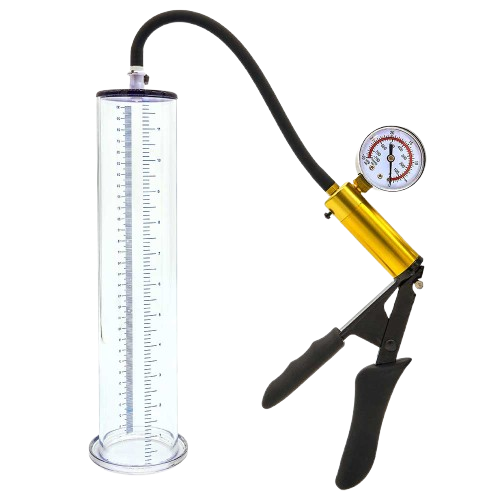
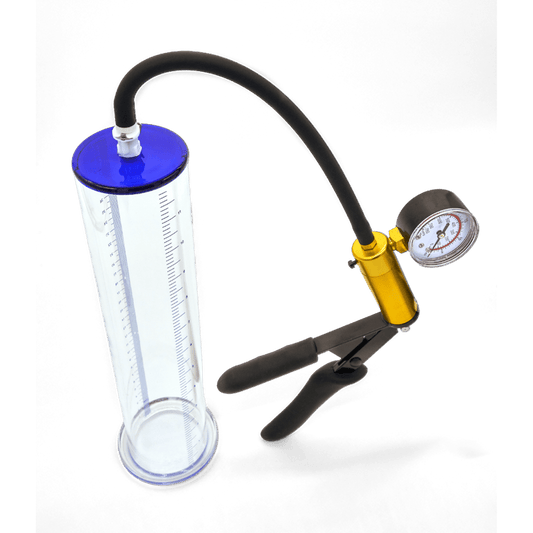
Slightly less well-known is the effectiveness of vacuum erection devices, or VEDs for short. A VED draws blood into the penis using gentle negative pressure, which can then be held in place with a constriction ring. This treatment is worth knowing about for three practical reasons: it is drug-free, it has no interactions with heart or other medications, and it works by a mechanical route that does not depend on which combination of age-related factors is causing the problem. One minor note to add is that if you're uncircumcised, retract the foreskin fully before each session and start at a low pressure. Foreskin swelling is a rare complication of VED use, but our medical team sees it more often in men with diabetes.

In practice, the most reliable results for men experiencing age-related ED usually come from a combination of approaches: working to improve vascular health while using a treatment that fits your unique health and medication circumstances. In simple terms, there’s no single approach that fits everyone, the right combination depends on the mix of causes.
When Should You See a Doctor?
You should see your doctor about any change in erections, even if you assume the cause is just age. In older men, ED can be an early warning sign of cardiovascular disease, since the same artery problems that reduce blood flow to the penis can affect the heart. What’s more, since the penile arteries are smaller, they often show signs of problems sooner than the larger vessels around the heart. A quick assessment from a medical professional can catch a treatable condition early, and help decide what’s actually driving the change.
This is the single most important reason not to self-diagnose the problem as “just getting older” and accept the changes. In fact, ED is such a reliable warning sign of heart problems that symptoms typically appear 2–3 years before angina and around 3–5 years before major cardiovascular events, creating a valuable window for prevention.
Of course, the possible problems don’t end with the heart and blood vessels. A visit will also help a doctor check for diabetes, review medications that might be causing problems, measure testosterone levels, and match a treatment to your situation.
The final point here is important. Even if the ED discussion has been raised before and somewhat brushed aside, that doesn’t mean there isn’t a problem. There’s no substitute for a proper assessment.
-
Electric Endurance Pro Pump
Learn MoreRegular price $95.99 - $119.99Unit price per -
ED Support Kit
Learn More$43.99 Regular price -
Endurance Pro Pump
Learn MoreRegular price $75.99 - $106.99Unit price per


Frequently Asked Questions
-
Is erectile dysfunction just a normal part of getting older?
ED becomes more common with age, but it’s not a normal or unavoidable part of aging on its own. The rise with age is driven by treatable conditions such as vascular disease, diabetes, and hormonal changes, but not by age directly. This is why it’s important to get a full assessment, rather than simply accepting the symptoms.
-
Is it normal to lose erections at night as you get older?
Nighttime erections do tend to become less frequent with age, so some reduction is common. However, an obvious loss of them can be a signal that there’s a vascular or nerve issue that’s worth having checked out, since nocturnal erections reflect how well both blood and nerve systems are working. If you’ve noticed a difference, mention it to your doctor.
-
Can erectile dysfunction be treated in older men, or is it permanent?
Age-related ED can almost always be treated or managed, even though it’s rarely outright ‘cured’ in the sense of returning to the erectile function you had in your twenties. Since causes are usually identifiable and individually treatable, most men over 60 can improve their erections with a combination of vascular health improvements, a device, or treatment of the underlying condition.
-
Does low testosterone cause erectile dysfunction after 60?
Low testosterone can contribute to ED, mainly by lowering desire, but it’s rarely the full story. Erections rely on blood vessel and nerve health that testosterone doesn’t control, so a man could have normal testosterone and still have ED, or low testosterone and erections that fail for other reasons. As such, TRT alone doesn’t always restore erections in older men.
-
Can lifestyle changes alone fix age-related ED?
For some men with milder, mainly vascular ED, improvements to exercise, sleep, weight, and blood pressure can produce a noticeable improvement on their own. In more severe cases, these lifestyle changes are a good foundation for other treatments and may help their effectiveness. Either way, it’s rarely a wasted effort because it addresses heart and metabolic health overall.
The Bottom Line: What To Do Now
If your erections have been changing gradually, either approaching or getting into your 60s, the most important thing to do is avoid just putting ED down to age and stopping there. It’s worth getting your symptoms assessed, because the change is often a symptom of a treatable condition.
These conditions can vary, but most are treatable or manageable, and there are options (including drug-free ones) that can work regardless of the exact mix of conditions involved.
If you take only one next step, it should be consulting with your doctor. Treating what you’re experiencing as a medical question with answers is far better than simply deciding this is another symptom of aging that just has to be endured.
References
National Institute of Diabetes and Digestive and Kidney Diseases. "Definition & Facts for Erectile Dysfunction." NIDDK, 2017. https://www.niddk.nih.gov/health-information/urologic-diseases/erectile-dysfunction/definition-facts.
Leslie SW, Sooriyamoorthy T. "Erectile Dysfunction." StatPearls [Internet], StatPearls Publishing, 2024. https://www.ncbi.nlm.nih.gov/books/NBK562253/.
Tariq SH, Haleem U, Omran ML, Kaiser FE, Perry HM 3rd, Morley JE. "Erectile dysfunction: etiology and treatment in young and old patients." Clinics in Geriatric Medicine, 2003. https://pubmed.ncbi.nlm.nih.gov/14567006/.
Aversa A, Bruzziches R, Francomano D, Natali M, Gareri P, Spera G. "Endothelial dysfunction and erectile dysfunction in the aging man." International Journal of Urology, 2010. https://onlinelibrary.wiley.com/doi/10.1111/j.1442-2042.2009.02426.x.
Torregrossa AC, Aranke M, Bryan NS. "Nitric oxide and geriatrics: Implications in diagnostics and treatment of the elderly." Journal of Geriatric Cardiology, 2011. https://pmc.ncbi.nlm.nih.gov/articles/PMC3390088/.
Ferrini MG, Gonzalez-Cadavid NF, Rajfer J. "Aging related erectile dysfunction—potential mechanism to halt or delay its onset." Translational Andrology and Urology, 2017. https://pmc.ncbi.nlm.nih.gov/articles/PMC5313305/.
Corona G, Maggi M. "The role of testosterone in male sexual function." Reviews in Endocrine and Metabolic Disorders, 2022. https://pmc.ncbi.nlm.nih.gov/articles/PMC9789013/.
Schiavi RC, Schreiner-Engel P. "Nocturnal penile tumescence in healthy aging men." Journal of Gerontology, 1988. https://pubmed.ncbi.nlm.nih.gov/3418036/.
Vetrano DL, Roso-Llorach A, Fernández S, Guisado-Clavero M, Violán C, Onder G, et al. "Twelve-year clinical trajectories of multimorbidity in a population of older adults." Nature Communications, 2020. https://www.nature.com/articles/s41467-020-16780-x.
Nandy PR, Singh DV, Madhusoodanan P, Sandhu AS. "Male Andropause: A Myth or Reality." Medical Journal Armed Forces India, 2008. https://pmc.ncbi.nlm.nih.gov/articles/PMC4921612/.
Rizk PJ, Kohn TP, Pastuszak AW, Khera M. "Testosterone therapy improves erectile function and libido in hypogonadal men." Current Opinion in Urology, 2017. https://pmc.ncbi.nlm.nih.gov/articles/PMC5649360/.
Lee H, Hwang EC, Oh CK, Lee S, Yu HS, Lim JS, et al. "Testosterone Replacement in Men with Sexual Dysfunction: An Abridged Version of the Cochrane Systematic Review." The World Journal of Men's Health, 2025. https://pmc.ncbi.nlm.nih.gov/articles/PMC12257328/.
Ghodeshwar GK, Dube A, Khobragade D. "Impact of Lifestyle Modifications on Cardiovascular Health: A Narrative Review." Cureus, 2023. https://pmc.ncbi.nlm.nih.gov/articles/PMC10460604/.
Kloner RA, Goggin P, Goldstein I, Hackett G, Kirby MG, Osterloh I, et al. "A New Perspective on the Nitrate-Phosphodiesterase Type 5 Inhibitor Interaction." Journal of Cardiovascular Pharmacology and Therapeutics, 2018. https://pubmed.ncbi.nlm.nih.gov/29739235/.
Hales CM, Servais J, Martin CB, Kohen D. "Prescription drug use among adults aged 40–79 in the United States and Canada." NCHS Data Brief, no. 347, National Center for Health Statistics, 2019. https://www.cdc.gov/nchs/products/databriefs/db347.htm.
Imprialos K, Koutsampasopoulos K, Manolis A, Doumas M. "Erectile Dysfunction as a Cardiovascular Risk Factor: Time to Step Up?" Current Vascular Pharmacology, 2021. https://pubmed.ncbi.nlm.nih.gov/32286949/.
