


If the ED pills that once worked have stopped, or never really quite worked the way you’d hoped, it can feel like you’re at the end of the road. In reality, that isn’t the case; you’re simply at a fork in it. Many men who take a PDE5 inhibitor such as Viagra (sildenafil) or Cialis (tadalafil) find that it eventually does less than it used to, and in around 30-35%, PDE5 inhibitors never responded well in the first place. What’s more, some men try medication and suffer side-effects, like headaches, low blood pressure, stuffiness in the ears and nose, upset stomach, muscle pain, and flushing, and therefore cannot take tolerate taking the medications, even if they want to.
These are some of the most common turning points in erectile dysfunction (ED) care, and also some of the most misunderstood.
In reality, “it stopped working” is rarely the whole story. In this guide, we’ll explore the biology of what’s happening in the body when pills appear to lose effectiveness. We’ll also take a detailed look at the other evidence-based ED treatment options that exist between pills that no longer work and surgery, so you can see where you are and what options you might want to talk to your doctor about next.
Why Does Viagra Stop Working?
When a PDE5 inhibitor stops working, the cause is usually one of three things: the underlying vascular or structural problem has progressed, the medication was never taken under conditions that gave it a fair chance of working, or, less frequently, the person using the pill wasn’t likely to respond well to the medication in the first place. In most cases, a medication that stops working is down to a signaling change in the body, not an ineffective drug.
To understand this properly, it’s useful to know what the drug actually does. A PDE5 inhibitor doesn’t create an erection; it amplifies the signal that the body is already trying to send.
Sexual stimulation releases nitric oxide in the penis, which raises a messenger molecule called cGMP. cGMP relaxes the smooth muscle that lines the arteries in the penis, so blood can flow in. The influx of blood makes the penis rigid and also compresses the veins to trap the blood in place. In medical terms, this process is known as the ‘veno-occlusive’ mechanism. The PDE5 inhibitor works by blocking the enzyme that breaks cGMP down, so the signal lasts longer and reaches further.
But, all this comes with an important “if.” The PDE5 inhibitor can only amplify and prolong a signal that’s already there. If the factor that’s limiting your erectile function is mechanical, either too little inflow of blood because of vascular disease or blood leaks back out because the veins are no longer compressed enough, then no amount of amplification of the signal corrects the problem. This is why a higher dose often disappoints; in many men, the dose is not the limiting factor.
Did the Pill Fail, or Was It Never Optimized?
For many men, “the pill failed” really means “the pill was never given a proper trial.” Before deciding that a medication has definitely stopped working, it’s important to ask whether it was ever used at the right dose, in the right way, and enough times to show what it can actually do.
A large number of apparent “failures” are really under-optimized attempts; in fact, one study of apparent sildenafil failures shows that 81% had taken the drug incorrectly. In practice, an adequate trial means using the right medication at an appropriate dose, taken under the conditions it was designed for, across multiple attempts. Many men give up after two or three frustrating tries, long before a fair conclusion is possible
In reality, an adequate trial of an oral ED medication generally includes:
- Finding the right dose. The starting dose is often not the effective one; the dose may need to be titrated upward under medical supervision.
- Enough attempts. Some men do not achieve an optimal response to a PDE5 inhibitor until several properly timed trials have been made, and studies suggest that response may continue to improve across as many as six to eight attempts.
- Correct timing. Sildenafil works best on an empty stomach, roughly 30 to 60 minutes before activity; a heavy or fatty meal blunts its absorption.
- Adequate sexual stimulation. The pill depends on the nitric oxide signal that stimulation provides; it does nothing on its own.
- A trial of a second agent. A man who does not respond to sildenafil may respond to tadalafil, and non‑responder management papers often recommend either switching PDE5 inhibitor or using a low daily tadalafil regimen rather than on‑demand dosing before moving on to second‑line treatments.
If several of these were missing, the honest next move may be to optimize the pill with a clinician before climbing the ladder at all.
What Is the Treatment Escalation Ladder?
The treatment escalation ladder is the ordered sequence of evidence-based ED options, arranged from least to most invasive: optimize the oral medication, then a vacuum erection device, then injections placed directly into the penis, and finally a surgically implanted device. Each rung is a genuine option, not a consolation prize, and most men never need to climb past the first two.
The point of the ladder is to match the option to the cause, not to rush toward surgery.
| RUNG | WHAT IT IS | HOW INVASIVE | WHO IT TENDS TO SUIT |
| Optimized oral medication | Adjusting dose or timing, or switching PDE5 inhibitor | Non-invasive | Men whose earlier trial was incomplete |
| Vacuum erection device (VED) | A pump that draws blood into the penis mechanically; a constriction ring holds it | Non-invasive, external | Men who don’t respond to, or can’t take, pills; including those on nitrates |
| Intracavernosal injection | A vasodilating medication injected into the side of the penis before activity | Minimally invasive | Men wanting a pharmacological option after pills and willing to self-inject |
| Penile implant | A surgically placed inflatable or malleable device | Surgical, permanent | Men for whom other rungs have failed or are unsuitable |
The point at which you might enter the treatment ladder is something your doctor will base on why the pill you’re taking stopped working.
Where Does a Vacuum Erection Device Fit When Pills Stop Working?
A vacuum erection device (VED) is the evidence-supported, non-invasive next rung for many men when pills are no longer enough. Major urological guidelines present it as a legitimate treatment option that can be offered at any point, including as an initial choice, not a last resort, and because it works mechanically rather than chemically, it does not depend on the nitric oxide signal a pill needs, carries no drug interactions, and can be used by men who cannot take PDE5 inhibitors at all.
A VED draws blood into the penis with an airtight cylinder that fits over the penis and creates negative pressure. Then, a constriction ring slid onto the base of the penis holds the erection in place. Because this action is mechanical, it sidesteps the limitations that often make people feel like pills aren’t working, i.e. it doesn’t need the body to generate or sustain its own erectile signal. This also makes it one of the few options that are available to men taking nitrate heart medication, since PDE5 inhibitors are absolutely contraindicated with nitrates.
While VEDs often sound like a strong option for a lot of men, it is important to be candid about the evidence rather than slipping into overstating the benefits. A 2026 systematic review and meta-analysis of 1,065 men with erectile dysfunction that had not responded to other treatments found a pooled success rate of 80%, though satisfaction rates do vary and there is a learning curve.
When Is the Problem Structural or Vascular?
Sometimes a pill stops working because the problem is mechanical, a structural, or vascular issue no oral medication can correct. The two most common examples are venous leak, where the veins fail to trap blood inside the penis, and Peyronie’s disease, where scar tissue bends or deforms it. In both, the limiting factor is physical, which is exactly why amplifying a chemical signal does not help.
Venous leak, a condition known medically as ‘corporo-venous occlusive dysfunction’, means the seal that should trap blood in the erection does not hold. When this occurs, a man might reach a partial erection that then fades, and a pill cannot reseal leaking veins. If this pattern sounds familiar, you can explore more in our dedicated guide to venous leak.
Peyronie’s disease introduces a different kind of structural issue. In some men, scar tissue (plaque) can build up in the penis, causing curvature, pain, or shortening, and this also changes which treatments are appropriate. Again, we have a dedicated guide exploring Peyronie’s disease if you feel like this could be a factor for you.
What Should You Do Next?
The single most useful next step is to confirm whether your pill was ever given an adequate trial, then take that information to a clinician who can map you onto the ladder. If the trial was incomplete, optimizing it may be all you need. If it was adequate and still failed, that is meaningful evidence pointing toward the next rung, and a urologist can help identify whether the cause is vascular, structural, or otherwise.
To be precise:
- Confirm an adequate trial of the medications: Correct drug and dose, the right timing, effective stimulation, and enough attempts.
- Track your function with an objective tool: The IIEF-5 questionnaire turns your view of a lived experience into a score that you can track and compare over time, as well as share with a clinician.
- Ask about other treatments: Speak to a urologist or sexual medicine specialist about other options, including vacuum devices, injections, and implants, not just other pills.
- Be clear about medications up front: Certain cardiac medications and some others can rule out specific options on the treatment ladder, so it’s important to discuss them frankly.
-
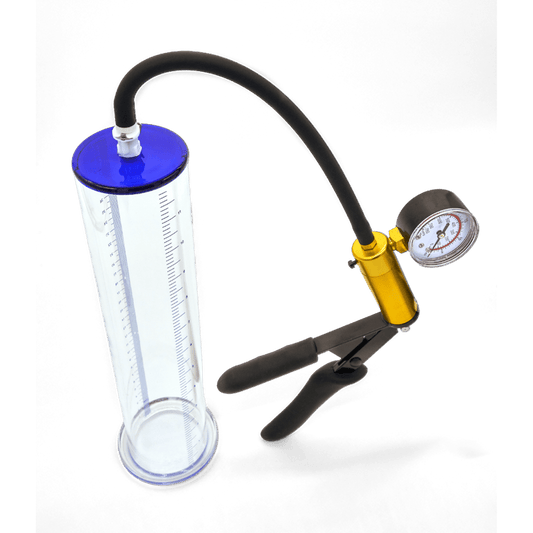
Endurance Pro Pump
Learn MoreRegular price $75.99 - $106.99Unit price per -
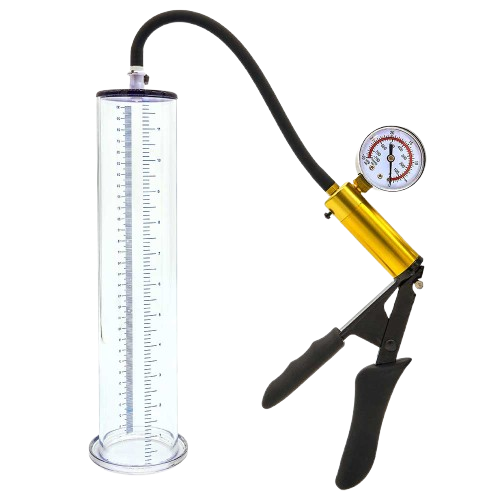
Precision Trigger Pump with Air Gauge
Learn More$37.99 Regular price$0.00Sale priceRegular price $37.99Unit price per -
The Overdrive Smart Pump
Learn More$79.99 Regular price


Frequently Asked Questions
-
Can Viagra stop working after years of use?
It can seem to, but true medical tolerance to Viagra isn’t well established. More often, it’s an underlying vascular or structural condition that’s progressed over those same years, which means the pill is now amplifying a weaker signal. In other words, the pill didn’t wear out; the body changed.
-
Is there a treatment that sits between ED pills and surgery?
Yes, more than one. The escalation ladder places a vacuum erection device and intracavernosal injections between optimized pills and surgery. A vacuum device in particular is a guideline-listed, non-invasive option, so most men have steps to try long before anyone needs to discuss surgery.
-
Does a higher dose of Viagra help once it stops working?
Sometimes, but often not. If your earlier dose was below the maximum, a doctor might consider adjusting your dose upward. That said, if the cause is reduced blood flow or a venous leak, a higher dose of a PDE5 inhibitor cannot fix a mechanical problem, so upping the dose is unlikely to help.
-
My Viagra doesn’t work like it used to, does that mean I need an implant?
Almost certainly not. An implant is considered the last rung of the treatment ladder, not the automatic next one if pills stop working. Most men who lose response to pills have options in between, including vacuum devices and injections. Only a small number need to proceed to surgery.
The Bottom Line
It’s easy to think that a pill that’s stopped working is a cut-and-dried verdict, but it’s not; it’s simply information. For many men, it’s a signal that a trial of the medication was incomplete and that the same treatment can be optimized for you. For others, it points to a structural or vascular cause that a different rung on the treatment ladder is better suited to addressing.
Either way, the path forward is clear; track your function, ask a clinician about the other options that sit between pills and surgery. Many men will find an effective solution well before the top of that ladder.
References
McMahon CN, Smith CJ, Shabsigh R. "Treating erectile dysfunction when PDE5 inhibitors fail." BMJ, 2006. https://pmc.ncbi.nlm.nih.gov/articles/PMC1397768/
Cai Z, Song X, Zhang J, Yang B, Li H. "Practical Approaches to Treat ED in PDE5i Nonresponders." Aging and Disease, 2020. https://www.aginganddisease.org/EN/10.14336/AD.2019.1028
Kim ED. "Erectile Dysfunction Medication." Medscape (eMedicine), 2022. https://emedicine.medscape.com/article/444220-medication.
Lowe G, Bahnson R. "Non-invasive management of primary phosphodiesterase type 5 inhibitor failure in patients with erectile dysfunction." Therapeutic Advances in Urology, 2009. https://pmc.ncbi.nlm.nih.gov/articles/PMC3126073/
Pyrgidis N, Mykoniatis I, Haidich A-B, Tirta M, Talimtzi P, Kalyvianakis D, Ouranidis A, Hatzichristou D. "The Effect of Phosphodiesterase-type 5 Inhibitors on Erectile Function: An Overview of Systematic Reviews." Frontiers in Pharmacology, 2021. https://www.frontiersin.org/journals/pharmacology/articles/10.3389/fphar.2021.735708/full
Hua V, Roth B, Shumaker A, Bole R, Bajic P. "Erectile Dysfunction: What Are the Options When PDE5 Inhibitors Fail?" Cleveland Clinic Consult QD, 2025. https://consultqd.clevelandclinic.org/erectile-dysfunction-what-are-the-options-when-pde5-inhibitors-fail
Zhang F, Luo Z, Xue Q, et al. "Efficacy of vacuum erectile device in refractory erectile dysfunction: a systematic review and meta-analysis." International Journal of Impotence Research, 2026. https://www.nature.com/articles/s41443-025-01102-w
Chris G. Mcmahon, Chelsea N. Mcmahon. "Erectile dysfunction. Part 2: Management of ED unresponsive to PDE5 inhibitors." Medicine Today, 2020. https://medicinetoday.com.au/mt/2020/april/feature-article/erectile-dysfunction-part-2-management-ed-unresponsive-pde5-inhibitors
MedlinePlus (U.S. National Library of Medicine). "Vacuum erectile devices for erection problems." MedlinePlus Medical Encyclopedia, 2024. https://medlineplus.gov/ency/patientinstructions/000985.htm.
Zhang F, Luo Z, Xue Q, et al. "Efficacy of vacuum erectile device in refractory erectile dysfunction: a systematic review and meta-analysis." *International Journal of Impotence Research*, 2026;38:76–85. https://www.nature.com/articles/s41443-025-01102-w
Hoyland K, Vasdev N, Adshead J. "The use of vacuum erection devices in erectile dysfunction after radical prostatectomy." Reviews in Urology, 2013. https://pmc.ncbi.nlm.nih.gov/articles/PMC3784970/
Rew KT, Heidelbaugh JJ. "Erectile Dysfunction." American Family Physician, 2016. https://www.aafp.org/afp/2016/1115/p820
Rosen RC, Cappelleri JC, Smith MD, Lipsky J, Peña BM. "Development and evaluation of an abridged, 5-item version of the International Index of Erectile Function (IIEF-5) as a diagnostic tool for erectile dysfunction." International Journal of Impotence Research, 1999. https://pubmed.ncbi.nlm.nih.gov/10637462/
