


If you’re experiencing erectile dysfunction (ED) and a medication like sildenafil (Viagra) or tadalafil (Cialis) didn’t work well enough, or your doctor mentioned “other options” in a quick conversation, this article is put together to help you answer any questions you might have been left with.
For many men, those questions revolve around what the actual other erectile dysfunction treatment options are, and how they compare to each other. Here, we’ll explore:
- PDE5 inhibitor pills
- Vacuum erection devices (VEDs)
- Intracavernosal injections and intraurethral suppositories
- penile implant surgery
- Sex and psychosexual therapy
- Shockwave therapy, and why it sits apart from the others
- Platelet-rich plasma (PRP) therapy, and why it’s still considered experimental
We’ll compare these side-by-side, against the same standard: what the American Urological Association (AUA) and European Association of Urology (EAU) guidelines actually say. By the end, you’ll know which order doctors typically recommend these therapies in, who each is right for, and what to bring to your next conversation with your doctor.
What Are the Treatment Options for Erectile Dysfunction?
Erectile dysfunction is common, so it’s something most men will discuss with a doctor at some point. Treatments for ED fall into five evidence-based categories: oral PDE5 inhibitors (sildenafil, tadalafil, and related medications), vacuum erection devices, intracavernosal injection or intraurethral suppository therapy (alprostadil), penile implant surgery, and sex or psychosexual therapy, which is used alongside the others rather than in place of them. Low-intensity shockwave therapy is covered separately, because it does not yet sit anywhere in the AUA/EAU established treatment structure.
No single option on this list is “best”. Instead, the right choice for you depends on the root cause of your ED, your health history, and how invasive an approach you’re willing to consider.
What Is the Standard Treatment Hierarchy for ED?
The standard ED treatment hierarchy, the sequence most clinicians follow in practice, moves from least invasive and most reversible to most invasive and least reversible: PDE5 inhibitors first, VED and injection therapy second, and penile implant surgery third, with sex therapy positioned as an adjunct used alongside any of the three lines rather than as a line of its own. Low-intensity shockwave therapy sits outside this structure entirely.
Treatments are ordered in this way because reversible, lower-risk options are tried first whenever they're medically appropriate, and because not responding at one line doesn't rule out success at the next. That said, there is one meaningful exception to this rule: for men who cannot safely take PDE5 inhibitors. If a man is using a nitrate medication or therapy for cardiovascular disease, injection therapy or VED use becomes the appropriate starting point, not an escalation from a failed first attempt.
-
First-line
PDE5 inhibitors (pills) like sildenafil, tadalafil, and related oral medications are the first-line for most men when there's no medical contraindication. -
Second-line
Vacuum erection devices and intracavernosal injection/suppository therapy are typically the second-line treatment options used when pills fail, aren't tolerated, or are contraindicated. -
Third-line
Use of a permanent surgical device, typically referred to as ‘penile implant surgery’, is typically considered when second-line options fail or aren't appropriate. -
Adjunct
An adjunct is an extra treatment used alongside a main treatment rather than instead of it. In ED, that means sex or psychosexual therapy, which can be used with any of the three lines above and is often most useful where anxiety or relationship strain has built up around the physical problem. -
Outside the hierarchy
Low-intensity shockwave therapy is the one option that does not sit anywhere on this list. It is not a treatment line, and it is not an adjunct in the way sex therapy is. The evidence base is not settled enough for the major guideline bodies to agree on where, or whether, it belongs, which is why it is treated separately in this article.
How Do the Five ED Treatments Compare? Pills vs. VED vs. Injections vs. Implants vs. Therapy
The five ED treatment categories differ most fundamentally in whether they depend on nerve function. PDE5 inhibitors amplify a nerve-triggered erection, injection and suppository therapy chemically trigger one, a vacuum erection device creates one mechanically with no nerve involvement, a penile implant replaces the mechanism entirely, and sex therapy sits alongside all of them rather than in the sequence. This is why two men can be routed to the same second-line treatment for different reasons; one because a nitrate prescription makes pills unsafe, the other because nerve damage makes them ineffective.
Each category below is set against the same fields: how it works, where it sits in the hierarchy, who it typically suits, and the main consideration attached to it.
| TREATMENT | HOW IT WORKS | HIERARCHY POSITION | BEST CANDIDATE | KEY CONSIDERATION |
| PDE5 inhibitors (pills) | Amplifies nerve-triggered blood flow via the nitric oxide pathway | First-line | Men with intact nerve function, no nitrate use | Absolutely contraindicated with nitrate therapy |
| Vacuum erection device (VED) | Direct negative-pressure mechanical erection | Second-line (first-line if nitrate contraindication) | Men with nerve damage, post-prostatectomy, or nitrate use | Requires a setup step before intercourse |
| Injection / suppository (alprostadil) | Direct vasodilation of penile tissue | Second-line | Men who didn't respond to pills | Priapism risk requires monitoring |
| Penile implant | Permanent mechanical prosthesis | Third-line | Men who failed first- and second-line options | Irreversible; surgical risks |
| Sex / psychosexual therapy | Addresses the psychological and relationship factors around ED | Adjunct, used alongside any line | Men with a psychogenic or relational component, or adjusting to a new treatment | Most effective when the partner takes part |
Low-intensity shockwave therapy is not included above because it does not yet have an agreed position in the treatment structure. It is covered in full further down.
How to Read the Success Rates Below
Success rates for ED treatments are not measured the same way from study to study. Some report the proportion of men who achieve an erection firm enough for intercourse, some report satisfaction, and some report how many men were still using the treatment a year later. Those three questions produce very different figures for the same treatment, so a higher number does not always mean a better option for you. Where the figures below come from a specific measure, this article says which.
How Do PDE5 Inhibitors (Sildenafil, Tadalafil) Work, and Who Are They Right For?
PDE5 inhibitors, including sildenafil (Viagra) and tadalafil (Cialis), work by blocking an enzyme called phosphodiesterase type 5. Blocking that enzyme lets the natural blood flow response your body produces during arousal last long enough to produce and hold an erection. For most men with ED, and where there's no medical reason to avoid them, these are the first-line treatment.
During arousal, nerves in the penis release nitric oxide, which relaxes the smooth muscle in the blood vessels and allows blood to flow in. Your body then naturally winds that response back down, and the PDE5 enzyme is a large part of how it does so. A PDE5 inhibitor simply slows that switch-off process. What it doesn't do is start the process for you. This is the single most useful thing to know about this class of medication: it amplifies an erection response that's already there, rather than creating one from nothing.
Two things follow from that. The first is that sexual stimulation is still required, as the pill won't produce an erection on its own. The second is that these medications rely on reasonably intact nerve signaling, which is why response tends to drop in men with significant nerve damage, such as after non-nerve-sparing prostate surgery.
The medications in this class also differ in how they're taken, with sildenafil used on-demand and tadalafil available either on-demand or as a low daily dose. This is often a practical deciding factor rather than a clinical one.
-
Who They’re Right For
Most men with mild to moderate ED, where nerve function is largely intact, and there's no medical reason to avoid them. If your ED has come on gradually, has no obvious surgical or nerve-related cause, and you're not taking any of the medications listed below, this is almost certainly where your doctor will start. -
Who They’re Not Right For
If you take nitrate medication for angina or another cardiovascular condition, PDE5 inhibitors are off the table completely. Taken together, the two can cause a sudden and dangerous drop in blood pressure. This isn't a caution to weigh up with your doctor; it's an absolute no, and it applies to a substantial number of men, with nitrates prescribed around 7.2 million times annually in the U.S. While it’s true that number covers both genders, it’s reasonable to assume there are still many millions of male nitrate users nationwide.
They also tend to work poorly where nerve damage is significant, such as after non-nerve-sparing prostate surgery, because the drug needs a nerve signal to amplify. -
Success Rates
Pooled across the trial evidence, sexual intercourse success is reported at around 69% with a PDE5 inhibitor, compared with 35% on placebo. That figure tracks intercourse that actually succeeded, rather than a general report of improvement. The two are often quoted interchangeably, and the improvement figure is always the higher of the two. Success drops noticeably in men with diabetes, which reflects the fact that diabetic ED often involves both blood vessel and nerve damage, giving the medication less to work with.
It's also worth knowing that a first attempt failing doesn't mean the medication has failed. Dose, timing, and the number of attempts all affect the outcome, and it's common for men to be re-tried properly before being moved on to a second-line option. -
Side Effects
Headache, facial flushing, a blocked nose, and indigestion are the ones most commonly reported. They're usually mild and linked to dose, so they often settle or can be managed by adjusting the amount taken. -
AUA/EAU Position
First-line treatment for most men with ED where there's no contraindication.
How Does a Vacuum Erection Device Work, and Who Is It Right For?
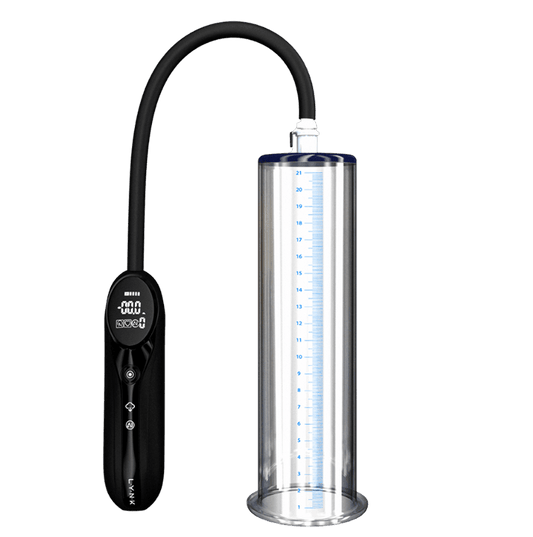
A vacuum erection device, often just called a “pump” or “VED”, works by placing a cylinder over the penis, sealing it around the base of the shaft, and using a hand or battery pump to draw blood into it with gentle negative pressure. Once an erection forms, a ring placed at the base holds the blood in place. Because it works mechanically, it doesn't depend on nerve signaling.
Pills, injections, and suppositories all act on the same biology: they amplify or trigger the smooth muscle relaxation that lets blood in. A vacuum erection device skips that pathway entirely, moving blood in with pressure and holding it with a constriction ring, meaning no nerve signal, hormone level, or drug response required.
This is why a VED remains a realistic option in a number of situations where medication often underperforms, including after radical prostatectomy, pelvic radiation, or spinal cord injury, and why it's frequently used during penile rehabilitation while nerves are still healing. It's also why it carries no nitrate interaction, which makes it a starting point rather than a fallback for men who can't take a PDE5 inhibitor at all.
The trade-off is practical rather than clinical. Using a VED involves a short setup step before intercourse, usually a few minutes, so it doesn't offer the same spontaneity as a pill taken in advance. For some men that's a non-issue, and for others it's the deciding factor. It's a question worth being honest with yourself about before you commit to one approach.
-
Who It’s Right For
Men recovering from prostate surgery or pelvic radiation, men with nerve-related ED, and men who can't take a PDE5 inhibitor because of nitrate therapy. It also suits anyone who would rather avoid adding another medication, or who wants an option that can be used as often as they like without a prescription cycle to manage. -
Who It’s Less Ideal For
Men who want sex to be entirely spontaneous, since a VED needs a few minutes of setup beforehand. It's also not usually the first thing tried in younger men whose ED is mainly psychological, where sex therapy and lifestyle changes tend to come first, with a device considered later if it's needed at all. -
Success Rates
A 2026 meta-analysis pooling 18 studies and 1,065 men found a success rate of 80%, with a confidence interval of 76 to 84%. Figures quoted elsewhere range more widely, and the reason for that is worth knowing. Studies define success differently, and some measure the erection itself while others measure whether couples kept using the device long-term. Consistency of technique makes a real difference here, which is why proper instruction at the start matters more with a VED than with a pill. -
Side Effects
Minor bruising, small red spots on the skin (petechiae), temporary numbness, and an erection that feels cooler than usual are the most commonly reported. These are generally mild. The erection also pivots at the base rather than feeling anchored, which is normal for a VED but does take a little getting used to. In men who are uncircumcised, foreskin swelling can also occur; it's rare, and retracting the foreskin fully before each session reduces the risk. -
AUA/EAU Position
Second-line generally, and first-line specifically for men who can't take a PDE5 inhibitor because of nitrate therapy. -
A Note on Devices
A true VED is a device that’s created with medical use in mind, not a novelty product. That distinction matters, because devices created for medical use include a vacuum limiter that prevents excessive pressure being applied. Novelty pumps sold without one can cause injury. The constriction ring also has a strict 30-minute time limit attached to it, and it shouldn't be left in place beyond the recommended period.
How Do Injections and Intraurethral Suppositories (ICI, Alprostadil) Work?
Intracavernosal injection (ICI) and intraurethral suppositories both deliver a medication, most commonly alprostadil, directly into the erectile tissue of the penis. Rather than amplifying your body's own arousal response, the medication relaxes the smooth muscle and opens the blood vessels itself, which means an erection can form without the nerve signaling that pills rely on.
The difference between the two is how the medication gets there.
With ICI, you use a very fine needle to inject a small dose into the side of the shaft. With the suppository form, a small pellet is inserted into the urethra, where the medication is absorbed into surrounding tissue. In both cases, the drug acts locally and directly, which is what makes them effective for men whose nerve function is significantly impaired.
The first is that because the medication does the work directly, an erection can occur with little or no sexual stimulation, typically within five to fifteen minutes. That's a real advantage over pills, but it's also a shift in how sex is approached, and it takes some getting used to.
The second is that injection therapy isn't something you're handed and sent home with. Your first dose is normally given and titrated in a clinical setting, so the right dose can be found, and you can be shown the technique properly.
The needle is the reason most men rule this out before hearing anything else. It's an understandable reaction, though it's worth knowing the needle is far finer than most people picture, and that response rates for ICI are among the highest of any non-surgical option.
-
Who It’s Right For
Men who didn't respond well to pills, men with significant nerve damage, and men who want a drug-based option but can't take an oral PDE5 inhibitor. It's also used in penile rehabilitation after prostate surgery. -
Who It’s Less Ideal For
Anyone unable to get past the needle, since the treatment only works if you'll actually use it. Extra caution also applies if you take blood-thinning medication, so mention it before you start. -
Success Rates
Measured as the proportion of men who achieve an erection sufficient for intercourse, ICI response rates are frequently cited at around 70–90%, the highest of any non-surgical option. Long-term continuation is a different figure and a much lower one: needle aversion, cost, and the loss of spontaneity mean over 50% of men who respond well stop using it within the first year. The suppository form is generally reported as less effective than injection. -
Side Effects
Pain at the site and bruising are the common side effects. The risk that matters most is priapism, an erection lasting beyond four hours, which is a medical emergency and needs treating the same day rather than being waited out. Correct dosing at the outset is largely what keeps this uncommon. -
AUA/EAU Position
Second-line, alongside VED.
What Does Penile Implant Surgery Involve, and When Does It Become the Right Option?
Penile implant surgery involves placing a device inside the penis so an erection can be produced on demand. The most common type is an inflatable system, with two cylinders in the penis, a small pump in the scrotum, and a fluid reservoir. Squeezing the pump inflates the cylinders. It's a third-line option, considered when pills and second-line treatments haven't worked.
There's also a simpler semi-rigid version, which uses bendable rods rather than a pump. It's positioned by hand rather than inflated, has fewer moving parts, and is sometimes preferred if dexterity is a concern.
The procedure itself is usually done under general anesthetic and often as a day case or single overnight stay, with a healing period of roughly four to six weeks before the device is used. The device sits entirely inside the body, so there's nothing visible externally.
The part that matters most in deciding, though, isn't the surgery. It's that this option is permanent.
To place the cylinders, the erectile tissue inside the penis has to be dilated, and that step can't be undone. Once an implant is in, a natural erection is no longer possible, and pills, injections, and a VED are no longer options either. If the device ever needs to be removed, you're not returned to where you started.
That's the reason it sits third in the hierarchy, and the reason timing matters. If your ED might still improve on its own, particularly during the recovery window after prostate surgery, that window is generally allowed to play out first.
For men who have worked through the earlier options, though, this is the one treatment that reliably ends the trial-and-error, which is reflected in satisfaction rates that are among the highest of any ED treatment.
-
Who It’s Right For
Men who have properly tried first- and second-line treatments without success, and men who want an on-demand solution with no pill to time, device to set up, or injection to prepare beforehand. -
Who It’s Less Ideal For
Anyone who hasn't yet worked through the less invasive options, or whose ED may still recover on its own, such as in the first year or two after nerve-sparing prostate surgery. Given that the step can't be reversed, there's rarely a good reason to take it early. -
Success Rates
Satisfaction is consistently reported as the highest of any ED treatment, with figures commonly between 80-90% for patients and partners. -
Side Effects
Infection is one of the main risks, although it’s reported at roughly only 1–3% with modern technique. Devices can also fail mechanically over time and may eventually need replacing. And to repeat the point above, because it matters more than any figure here: the procedure isn't reversible. -
AUA/EAU Position
Third-line, considered once first- and second-line options have failed or aren't appropriate.
Does Shockwave Therapy Work for Erectile Dysfunction?
Low-intensity shockwave therapy (LiSWT) uses acoustic pulses directed at penile tissue, with the aim of encouraging new blood vessel growth and improving local blood flow. Some men do see improvement, particularly those with mild vascular ED. However, the evidence behind it is much less settled than for pills, VEDs, injections, or implants, which is why it sits outside the established treatment structure rather than within it. It is not an adjunct in the way sex therapy is; the two are often grouped together on some sites only because neither is a numbered line.
Put plainly, studies into shockwave therapy are often simply too varied, too small, or too short-term to draw firm conclusions from. As such, low-intensity shockwave therapy is not FDA-approved for erectile dysfunction in the United States, and is used off-label where it is offered.
AUA/EAU Position
The two bodies do not agree on this one. The AUA classifies low-intensity shockwave therapy as investigational. The EAU is more permissive, issuing a weak recommendation for its use in three specific groups: men with mild vasculogenic ED, men with vasculogenic ED who respond poorly to PDE5 inhibitors, and well-informed men who are unsuitable for oral therapy or would rather avoid it. Neither body positions it as a routine treatment line.
What is Sex Therapy, and Is It a Useful Addition?
Sex therapy, sometimes called psychosexual therapy, is structured talking therapy with a trained therapist that addresses the psychological and relationship factors involved in ED. That includes performance anxiety, stress, low confidence after a treatment that didn't work, and difficulties between partners. It's classed as an adjunct, meaning it's typically used alongside a physical treatment rather than instead of one.
It tends to be underrated, largely because men assume it's only relevant if their ED is "all in the head". In practice, the two sides rarely stay separate for long. ED that begins for a clearly physical reason often picks up an anxiety component over time, simply because sex starts carrying an expectation of failure. Once that happens, treating only the physical side can leave part of the problem in place.
This is also why sex therapy sits comfortably alongside every other established option on this page. A man using a VED after prostate surgery, or working through injection therapy for the first time, may benefit from support with the adjustment as much as from the treatment itself. Where a partner is involved, therapy is frequently more effective when they take part too.
AUA/EAU Position
Both bodies support it, and the EAU rates it strongly. The EAU issues a strong recommendation to direct men to cognitive behavioral therapy, including the partner where appropriate, combined with medical treatment rather than in place of it. The AUA gives a moderate recommendation that men being treated for ED be referred to a mental health professional, specifically to promote treatment adherence, reduce performance anxiety, and integrate treatment into a sexual relationship.
Which ED Treatment Is Right for Me?
The right first treatment is determined mainly by two clinical facts: what is causing your ED, and whether you can safely take a PDE5 inhibitor. Most men with intact nerve function and no nitrate use start with pills. Men on nitrate therapy start with a vacuum erection device or injection therapy instead, and men with significant nerve damage (after non-nerve-sparing prostate surgery, or with a spinal cord injury) are usually routed the same way, because pills need a nerve signal to amplify. Personal preference then decides between the options your clinical situation leaves open, rather than the other way around.
What Your Situation Rules In or Out
| YOUR SITUATION | WHERE YOU MOST LIKELY START | WHY |
| You take nitrates for angina or another cardiovascular condition | VED or injection therapy, as a starting point rather than an escalation | PDE5 inhibitors are absolutely contraindicated with nitrate therapy |
| ED came on gradually, with no surgery, nerve condition, or nitrate use | PDE5 inhibitor (sildenafil, tadalafil) | First-line for most men where nerve signaling is intact |
| Recovering from radical prostatectomy or pelvic radiation | VED, often as part of penile rehabilitation; injection therapy also used | A mechanical erection does not depend on nerve signaling while nerves heal |
| Spinal cord injury or another significant nerve condition | VED or injection therapy | Pills need a nerve signal to amplify |
| Pills tried properly, right dose, several attempts, without success | Second-line: VED or injection therapy | Failing at one line does not predict failing at the next |
| First- and second-line options meaningfully worked through | A penile implant conversation | Third-line, and irreversible, so the earlier lines come first |
| Anxiety, confidence, or relationship strain is a significant part of the picture | Sex therapy alongside whichever physical option fits | An adjunct, used with a physical treatment, not instead of one |
Then Choose Between What’s Left
Once your clinical situation has narrowed the list, three practical questions decide between the options still standing, and these are worth being honest with yourself about, because the best treatment on paper is not the best treatment for you if you won't use it.
How invasive an approach are you comfortable with? The scale runs pills, then VED, then injections, then an implant. Effectiveness generally rises along that line, but so does what each option asks of you.
What will you actually use? A VED needs a few minutes of setup before sex. Injections need preparation and, at the start, clinical instruction. A pill needs timing rather than technique. None of that is a clinical objection; it's a consistency question.
Where does your partner fit? VED and injection therapy are both easier when a partner understands what's involved and is comfortable being part of it. If you have a partner, this is worth discussing before you commit rather than after.
-
Electric Endurance Pro Automatic Vacuum Pump
Learn MoreRegular price $95.99 - $119.99Unit price per -
The Ace Automatic Pump
Learn More$58.99 Regular price -
ED Support Kit
Learn More$43.99 Regular price



Frequently Asked Questions
-
What is the first-line treatment for erectile dysfunction?
For most men without a medical contraindication, PDE5 inhibitors such as sildenafil or tadalafil are first-line, per AUA and EAU guidance. Men who cannot take PDE5 inhibitors, most often because of nitrate therapy, typically start with a vacuum erection device or injection therapy instead, since neither carries the same contraindication.
-
Can I combine more than one ED treatment at the same time?
Yes, in many cases. PDE5 inhibitors and VED, for example, are sometimes combined, and VED is frequently used as part of penile rehabilitation after prostate surgery, alongside other approaches. Always confirm any combination with your doctor first, since some combinations carry real safety considerations that are specific to your health history.
-
My doctor mentioned a pump after my prostate surgery. Does it actually work as well as pills?
A “pump” (known medically as a ‘vacuum erection device’) works through a different mechanism than pills, direct negative pressure rather than nerve-triggered blood flow, which is exactly why it's often recommended while nerves are still healing after surgery. It isn't a like-for-like substitute for pills, but it's a guideline-supported option specifically because it doesn't depend on nerve function.
-
Is a vacuum erection device an option if I can’t take Viagra or Cialis because of heart medication?
Yes. Because a VED produces an erection through mechanical vacuum action rather than a drug interacting with the nitric oxide pathway, it carries no nitrate interaction risk, making it a real first-line option, not a fallback, for men on nitrate therapy.
-
Does shockwave therapy actually cure erectile dysfunction?
Low-intensity shockwave therapy shows promise for some men, particularly those with mild vascular ED, but current evidence is far less established than for PDE5 inhibitors, VED, injection therapy, or implants. It's best discussed with a doctor as an emerging option, not treated as an established cure.
Conclusion: What Comes Next?
There are five categories and one standard hierarchy of treatment for ED, but what’s right for you will be dictated by your unique health circumstances.
One of the best ways to find a treatment that’s right for you is to be specific. Rather than asking “What can I do about my ED?”, try “Given [your specific condition, i.e., nitrate use, prior surgery, diabetes, or treatment that didn’t work], where do I fit in the treatment hierarchy, and what would you recommend I try first?”
This way of framing the question gives your doctor the information to route you correctly, as well as understanding that you’re someone who wants to go deeper than generic answers. If you’re someone who has already tried a PDE5 inhibitor without success, you might benefit from reading more about how VED therapy compares to medication before your next appointment; it can be useful to understand the alternative in detail before you’re in the room.
References:
Burnett AL, Nehra A, Breau RH, et al. "Erectile Dysfunction: AUA Guideline." American Urological Association, 2018. https://www.auanet.org/guidelines-and-quality/guidelines/erectile-dysfunction-(ed)-guideline
European Association of Urology. "European Association of Urology Guidelines on Sexual and Reproductive Health—2021 Update: Male Sexual Dysfunction." European Urology, 2021. https://pubmed.ncbi.nlm.nih.gov/34183196/
National Institute of Diabetes and Digestive and Kidney Diseases. "Definition & Facts for Erectile Dysfunction." NIDDK (National Institutes of Health), 2017. https://www.niddk.nih.gov/health-information/urologic-diseases/erectile-dysfunction/definition-facts
Brison D, Seftel A, Sadeghi-Nejad H. "The Resurgence of the Vacuum Erection Device (VED) for Treatment of Erectile Dysfunction." Sexual Medicine Reviews, 2015. https://www.sciencedirect.com/science/article/abs/pii/S1743609515303271
Andersson KE. "PDE5 inhibitors – pharmacology and clinical applications 20 years after sildenafil discovery." British Journal of Pharmacology, 2018. https://pmc.ncbi.nlm.nih.gov/articles/PMC6003652/
Leslie SW, Jain A, Iqbal OA. "Alprostadil." StatPearls [Internet]. StatPearls Publishing, 2025. https://www.ncbi.nlm.nih.gov/books/NBK542217/
Cavayero CT, Leslie SW, McIntosh GV. "Penile Prosthesis Implantation." StatPearls [Internet]. StatPearls Publishing, 2024. https://www.ncbi.nlm.nih.gov/books/NBK563292/
Hayon S, Panken EJ, Bennett NE. "Variations in Low Intensity Shockwave Treatment Protocols for Erectile Dysfunction: A Review of the Literature and Guide to Offering Treatment." The World Journal of Men's Health, 2024. https://pmc.ncbi.nlm.nih.gov/articles/PMC10949028/
Dhaliwal A, Gupta M. "PDE5 Inhibitors." StatPearls [Internet]. StatPearls Publishing, 2023. https://www.ncbi.nlm.nih.gov/books/NBK549843/
Lowe G, Bahnson R. "Non-invasive management of primary phosphodiesterase type 5 inhibitor failure in patients with erectile dysfunction." Therapeutic Advances in Urology, 2009. https://pmc.ncbi.nlm.nih.gov/articles/PMC3126073/
Schwartz BG, Kloner RA. "Drug Interactions With Phosphodiesterase-5 Inhibitors Used for the Treatment of Erectile Dysfunction or Pulmonary Hypertension." Circulation, 2010. https://www.ahajournals.org/doi/10.1161/circulationaha.110.944603
Kane SP. "Nitrate Vasodilator – Drug Usage Statistics." ClinCalc DrugStats Database, [n.d.]. https://clincalc.com/DrugStats/EPC/NitrateVasodilator
Tsertsvadze A, Fink HA, Yazdi F, et al. "Oral Phosphodiesterase-5 Inhibitors and Hormonal Treatments for Erectile Dysfunction: A Systematic Review and Meta-analysis." Annals of Internal Medicine, 2009. https://pubmed.ncbi.nlm.nih.gov/19884626/
Swiecicka A. "The efficacy of PDE5 inhibitors in diabetic patients." Andrology, 2023. https://pmc.ncbi.nlm.nih.gov/articles/PMC10107754/#andr13328-sec-0140
Lui JL, Shaw NM, Abbasi B, Hakam N, Breyer BN. "Adverse reactions of PDE5 inhibitors: An analysis of the World Health Organization pharmacovigilance database." Andrology, 2023. https://pubmed.ncbi.nlm.nih.gov/36905319/
Lehrfeld T, Lee DI. "The role of vacuum erection devices in penile rehabilitation after radical prostatectomy." International Journal of Impotence Research, 2009. https://pubmed.ncbi.nlm.nih.gov/19225465/
Zhang F, Luo Z, Xue Q, et al. "Efficacy of vacuum erectile device in refractory erectile dysfunction: a systematic review and meta-analysis." International Journal of Impotence Research, 2026. https://www.nature.com/articles/s41443-025-01102-w
Lin H-C, Wang R. "The science of vacuum erectile device in penile rehabilitation after radical prostatectomy." Translational Andrology and Urology, 2013. https://pmc.ncbi.nlm.nih.gov/articles/PMC4708600/
Wang R et al. "Vacuum erectile devices for erectile dysfunction: recommendations from the 5th international consultation on sexual medicine." Sexual Medicine Reviews, 2025. https://academic.oup.com/smr/article/13/2/172/8016502
"Alprostadil Urethral Suppository." Clinician.com (Internal Medicine Alert), 1997. https://www.clinician.com/articles/52361-alprostadil-urethral-suppository
Coombs PG, Heck M, Guhring P, Narus J, Mulhall JP. "A review of outcomes of an intracavernosal injection therapy programme." BJU International, 2012. https://pubmed.ncbi.nlm.nih.gov/22564343/
Zaslau et al.. "Comparing Transurethral Alprostadil with Intracavernosal Injections in a VA Impotence Clinic." MDedge, [Year]. https://cdn-uat.mdedge.com/files/s3fs-public/Document/September-2017/024110011.pdf
Zhao H, Berdahl C, Bresee C, Moradzadeh A, Houman J, Kim H, Eilber K, Pevnick J, Anger JT. "Priapism from Recreational Intracavernosal Injections in a High-Risk Metropolitan Community." The Journal of Sexual Medicine, 2019. https://pmc.ncbi.nlm.nih.gov/articles/PMC7416696/
University of Utah Health. "Penile Implant Recovery." University of Utah Health, [n.d.]. https://healthcare.utah.edu/mens-health/treatments/penile-implants/about-procedure/recovery
Minhas S, et al. "Penile implant surgery—managing complications." Faculty Reviews, 2021. https://pmc.ncbi.nlm.nih.gov/articles/PMC8483239/
Broderick GA. "Shock Wave Therapy: Is It Ethical to Offer and Charge for Erectile Dysfunction or Other Sexual Dysfunctions?" AUANews, 2023. https://auanews.net/issues/articles/2023/march-2023/shock-wave-therapy-is-it-ethical-to-offer-and-charge-for-erectile-dysfunction-or-other-sexual-dysfunctions
Vasan SS, Pandey S, Rao STS, et al. "Association of Sexual Health and Mental Health in Erectile Dysfunction: Expert Opinion From the Indian Context." Cureus, 2025. https://pmc.ncbi.nlm.nih.gov/articles/PMC11845324/
U.S. Food and Drug Administration. "External Penile Rigidity Devices — Class II Special Controls Guidance Document for Industry and FDA Staff." FDA (Center for Devices and Radiological Health), 2004. https://www.fda.gov/medical-devices/guidance-documents-medical-devices-and-radiation-emitting-products/external-penile-rigidity-devices-class-ii-special-controls-guidance-document-industry-and-fda-staff
British Association of Urological Surgeons. "Vacuum Erection Assistance Devices (VEDs)." BAUS Patient Information Leaflet, 2020. https://www.baus.org.uk/_userfiles/pages/files/Patients/Leaflets/VEDs.pdf
Leslie SW, Jain A, Iqbal OA. "Alprostadil." StatPearls [Internet]. StatPearls Publishing, 2025. https://www.ncbi.nlm.nih.gov/books/NBK542217/
Dean J, Fisher WA, Rubio-Aurioles E, et al. "Integrating partners into erectile dysfunction treatment: improving the sexual experience for the couple." International Journal of Clinical Practice, 2008. https://onlinelibrary.wiley.com/doi/10.1111/j.1742-1241.2007.01636.x
De Rocco Ponce M, Silva Garretón A, Sousa Iglesias Á, et al. "Patient Satisfaction and Outcomes of Penile Prosthesis Implantation in Psychogenic and Organic Erectile Dysfunction: A Comparative Study." Journal of Clinical Medicine, 2025. https://doi.org/10.3390/jcm14145032
