


If you have recently been told you have erectile dysfunction, or you have noticed a change and have not yet mentioned it to anyone, the most useful first question is not which treatment to choose. It is what is actually happening inside your body.
Erectile dysfunction is not one condition with one cause. An erection is produced by a sequence: a nerve signal, a chemical messenger, relaxing muscles, arriving blood, and a mechanism that holds that blood in place. erectile dysfunction (ED) is what happens when any link in that sequence fails. Which link has failed determines what type of ED a man has, how it is diagnosed, and which treatments are likely to work for him. Sometimes, an exact link or cause cannot be determined despite best efforts, and a variety of treatment options are considered.
This article explains what erectile dysfunction is medically, how a normal erection is produced, what changes in the body occur when it stops happening, and how clinicians identify which part of the sequence has broken down.
What Is Erectile Dysfunction, Medically?
Erectile dysfunction is the persistent inability to achieve or maintain an erection sufficient for satisfactory sexual performance.

In U.S. data, ED is diagnosed or treated in about 5% of men under 40, roughly 1 in 6 men in their 40s, 1 in 3 in their 50s, and well over half of men over 70.
Clinicians measure the severity of erectile dysfunction using the five-item International Index of Erectile Function (IIEF-5), a validated five-question instrument that scores erectile function across defined severity bands from severe dysfunction to no dysfunction. The score is used both to establish a baseline at diagnosis and to measure whether a treatment is working.
Erectile dysfunction is further classified along two axes that carry real diagnostic weight.
| TWO AXES OF ERECTILE DYSFUNCTION |
DESCRIPTION |
| Onset | Lifelong ED has been present since a man’s first sexual experiences, while acquired ED develops after a period of normal function |
| Consistency | Generalized ED occurs regardless of circumstance or partner, while situational ED occurs only in specific contexts. |
These two factors narrow the likely mechanism before any test is ordered. Acquired, generalized erectile dysfunction that developed gradually points toward a physical cause. Acquired, situational erectile dysfunction that appeared abruptly points toward a psychological contributor. This is why a clinician asks when the change started and whether it happens every time, rather than beginning with bloodwork.
How Does a Normal Erection Actually Happen?
An erection begins in the nervous system, not in the penis. Sexual stimulation prompts parasympathetic nerve fibers and the endothelium (the inner lining of the penile blood vessels) to release nitric oxide, which relaxes the smooth muscle inside the erectile chambers. Relaxed smooth muscle allows arterial blood to fill those chambers faster than the veins can drain them, and the resulting pressure produces rigidity.
Nitric oxide produces that relaxation through a specific chemical signal inside the smooth muscle cells of the corpora cavernosa, the two parallel chambers of erectile tissue running the length of the penis. Nitric oxide activates an enzyme called guanylate cyclase, which converts GTP into cyclic guanosine monophosphate, or cGMP. Rising cGMP levels drive calcium out of the smooth muscle cells, and because smooth muscle requires calcium to remain contracted, the muscle relaxes. Our guide to How Erections Actually Work follows this pathway enzyme by enzyme; the summary version here is enough to see what has to work correctly for an erection to occur.
Arterial inflow to the corpora cavernosa rises sharply as the smooth muscle relaxes and the penile arteries dilate.
An erection is then held in place by a mechanical trapping mechanism rather than by continuous inflow. As the corpora cavernosa expand, they compress the subtunical venules (the small veins that normally drain the penis) against the tunica albuginea, the tough fibrous sheath surrounding each chamber. This is the veno-occlusive mechanism, and it explains why a man can have entirely normal arterial inflow and still be unable to maintain an erection: if the veins do not seal, blood escapes as quickly as it arrives. This is known as a venous leak.
Detumescence occurs when the enzyme phosphodiesterase type 5 (PDE5) breaks cGMP back down. Calcium returns to the smooth muscle cells, the muscle contracts, the venules reopen, and the trapped blood drains. PDE5 is the target of the most widely prescribed oral ED medications, which work by slowing this breakdown rather than by initiating an erection.
The whole sequence is an example of neurovascular coupling: a nervous system signal and a vascular response that must operate in precise combination, in the right order, within seconds of each other. Erectile dysfunction can originate at any point along it; in the nerve signal, in nitric oxide release, in the artery’s ability to dilate, in the vein’s ability to seal, or in the erectile tissue itself.

What Goes Wrong in the Body When ED Happens?
Erectile dysfunction occurs when one or more links in the nerve-to-vessel-to-tissue sequence fail. Clinicians sort those failures into two categories:
-
Organic erectile dysfunction, in which a physical structure involved in the sequence is impaired.
- Psychogenic erectile dysfunction, in which an intact system is actively overridden by the body’s stress response.
Both are genuine physiological events. They differ in where the disruption originates, not in whether it is real.
These issues can occur at five distinct points in the process: the arteries that must dilate, the veins that must seal, the nerves that carry the signal, the hormones that sustain tissue responsiveness and desire, or the erectile tissue itself when it has been physically altered by scarring or injury.
Psychogenic erectile dysfunction works by opposition rather than by damage. Anxiety, stress, and depression activate the sympathetic nervous system, which releases norepinephrine and contracts the same cavernosal smooth muscle that nitric oxide is attempting to relax. One branch of the nervous system is working directly against the other, and in that contest the sympathetic signal generally prevails.
Mixed etiology ED is very common, and it is one reason erectile dysfunction often resists a single clean explanation. A man with an early organic vulnerability may develop a secondary psychogenic component once performance anxiety attaches itself to the physical symptom, at which point two mechanisms are operating at once, and each is reinforcing the other. In a recent clinical cohort, roughly 85–90% of men presenting with ED met criteria for a primarily organic cause and about 10–15% for a primarily psychogenic cause, with mixed organic–psychogenic mechanisms frequently observed in everyday practice.
Age alone is a poor predictor of which mechanism is at work. A man in his thirties with no cardiovascular risk factors who develops sudden ED after a stressful period is experiencing a physiologically different event from a man in his sixties with diabetes whose function has declined gradually over several years, even though both would describe themselves in conversation as simply having ED. Identifying the mechanism replaces a vague label with an answerable question: which link in the chain is failing, right now?
Why Does Erectile Tissue Change When Erections Stop?
Erectile tissue depends on regular erections to remain healthy. Each erection floods the corpora cavernosa with oxygenated arterial blood, and when erections stop occurring, the tissue spends prolonged periods in a low-oxygen state. Sustained cavernosal hypoxia drives the replacement of smooth muscle with collagen, a process called fibrosis, and a reduction in smooth muscle volume known as atrophy.
Nocturnal erections are the mechanism by which this oxygenation normally happens. A healthy man produces several erections during REM sleep without any sexual stimulus, and their principal function appears to be tissue maintenance rather than arousal. In healthy males, this typically means about 3–5 erections per night, each lasting roughly 15–40 minutes. Their absence is both a diagnostic signal and a contributor to further deterioration.
Fibrosis matters because it is partly self-reinforcing. Smooth muscle that has been replaced by collagen cannot relax in response to nitric oxide, and tissue that cannot expand fully cannot compress the subtunical venules hard enough to trap blood. Fibrosis therefore produces venous leak, venous leak reduces erectile capacity further, and reduced erectile capacity means still less oxygenation, a loop that tightens over time. Therapies like vacuum erection devices can help decrease or reduce the amount of penile fibrosis a man has.

This is the physiological reason that duration matters in erectile dysfunction, and the rationale behind early intervention after nerve injury: the goal is to keep the tissue oxygenated during the period when the nerve signal is absent, so that the tissue is still capable of responding if the signal returns. Our article on ED after surgery or treatment covers how this principle is applied clinically.
What Are the Four Physical Causes of ED?
Organic erectile dysfunction falls into four mechanistic categories: vascular, neurogenic, hormonal, and structural. Each disrupts a different point in the erection sequence, and each tends to produce a recognizably different clinical pattern. Vascular causes are the most common category in men over 50.
- Vascular: Arterial disease restricts blood flow into the penis, or venous insufficiency prevents blood being trapped once it arrives.
- Neurogenic: Nerve damage interrupts the arousal signal traveling from brain and spinal cord to the erectile tissue.
- Hormonal: Low testosterone reduces desire and weakens nitric oxide signaling within penile tissue.
- Structural: Physical change to the erectile tissue limits how far the corpora cavernosa can expand.
The table below sets out where each category interrupts the sequence and how it typically presents.
| CATEGORY | WHERE THE SEQUENCE FAILS | COMMON UNDERLYING CONDITIONS | TYPICAL CLINICAL PATTERN |
| Vascular | Arterial inflow is restricted, or the veno-occlusive mechanism fails to trap blood | Atherosclerosis, hypertension, high cholesterol, diabetes, smoking | Gradual onset; consistent across situations; often alongside other cardiovascular risk factors |
| Neurogenic | The nerve signal never reaches the erectile tissue, or arrives too weakly | Diabetic neuropathy, multiple sclerosis, spinal cord injury, pelvic surgery or radiation | Onset often traceable to a specific event or diagnosis; loss of nocturnal erections |
| Hormonal | Low testosterone reduces desire and blunts the nitric oxide signal in penile tissue | Hypogonadism, androgen deprivation therapy, pituitary disorders | Reduced libido alongside reduced function; fatigue and mood change often present |
| Structural | The erectile tissue itself cannot expand, regardless of nerve and vascular signaling | Peyronie's disease, corporal fibrosis, penile trauma, congenital abnormality | Often accompanied by curvature, pain, or palpable plaque; may be position-dependent |
Severity also tends to track with the underlying cause. In clinic samples, men whose ED is mainly due to physical problems in the blood vessels, nerves, or penile structure usually score lower on standard ED questionnaires than men whose ED is mostly anxiety-driven, with average scores in the low-teens for organic causes versus the mid-teens for psychogenic ED.
Is Psychogenic ED “Real” ED?
Yes. Psychogenic erectile dysfunction is a distinct physiological mechanism, not just a way of explaining stress and not a diagnosis reached only when nothing else can be found. Its pathway is identifiable: sympathetic nervous system overactivity directly opposing the parasympathetic, nitric oxide-driven relaxation that an erection requires. It is also a common classification in modern ED clinics, accounting for roughly 1 in 7 new ED diagnoses in large real-world samples, and an even higher share in younger men.

The confusion comes largely from the word “psychological,” which sounds as though it means “not physical.” The sympathetic nervous system’s smooth-muscle-contracting signal is exactly as physiological as the parasympathetic relaxation signal it overrides; it simply originates from an emotional or cognitive trigger, such as performance anxiety, relationship stress, or depression, rather than from a damaged vessel or nerve.
Preserved nocturnal and early-morning erections are the clearest practical marker of psychogenic ED. If the erectile tissue, arteries, and nerves are capable of producing an erection during sleep, when no performance pressure exists, the hardware is functioning, and the disruption is occurring at the level of the signal. This single observation is often what separates psychogenic from organic ED before any test is ordered.
Psychogenic and organic erectile dysfunction frequently coexist. A man with mild vascular ED may develop a psychogenic component once anxiety attaches to the physical symptom, which is why effective treatment often addresses both the anxiety response and the underlying organic contributor rather than choosing between them.
Why Is Erectile Dysfunction an Early Warning Sign for Heart Disease?
The arteries supplying the penis are substantially narrower than the coronary arteries, so the same endothelial disease that eventually restricts blood flow to the heart restricts penile blood flow first. Penile arteries are typically about 1–2 mm across, compared with roughly 3–4 mm for the main coronary arteries. Vascular erectile dysfunction therefore often appears 2–5 years before a cardiac event becomes apparent, acting as an early warning sign of underlying cardiovascular disease.
Endothelial dysfunction is the shared mechanism at play here. The endothelium is the tissue that produces nitric oxide, and nitric oxide is required both for penile smooth muscle relaxation and for healthy dilation of arteries throughout the body. When the endothelium is damaged by atherosclerosis, hypertension, diabetes, or smoking, nitric oxide production falls everywhere at once, but the effect becomes noticeable soonest in the smallest vessels.
New-onset erectile dysfunction without an obvious cause is consequently treated in current clinical guidance as an indication for cardiovascular assessment, not solely as a sexual health complaint. If you or someone you know is trying to decide whether this is worth raising with a doctor, this article on ED and cardiovascular disease explains exactly why it is.
How Do Doctors Determine Which Type of ED Someone Has?
Diagnosis begins with history rather than testing. The pattern of onset, the consistency of the symptoms, and the presence or absence of nocturnal and early-morning erections identify the likely mechanism in most cases. An IIEF-5 score, a physical examination, and basic bloodwork then confirm it and quantify severity.
Basic bloodwork maps directly onto the organic categories. Testosterone and related hormone levels address the hormonal category; fasting glucose or HbA1c addresses diabetes as a driver of both vascular and neurogenic ED; a lipid panel and blood pressure reading address vascular risk. A medication review runs alongside this, because several common drug classes, including some antihypertensives and antidepressants, can produce erectile dysfunction as a side effect that resolves when the prescription is changed.
Advanced testing is reserved for the minority of cases in which the mechanism remains unclear after this workup. Nocturnal penile tumescence monitoring measures whether erections occur during sleep, and penile Doppler ultrasound measures arterial inflow and venous sealing directly. Most men reach a working diagnosis without either.
Does the Cause Change What Treatment Works?
Yes, substantially. Treatment for erectile dysfunction is selected against the specific mechanism that has failed, and an intervention that resolves one category may do very little for another. This is the practical reason that identifying the mechanism comes before choosing a treatment instead of after it.
Each category has a corresponding first-line approach.
| ED CATEGORY | CORRESPONDING FIRST-LINE APPROACH |
| Hormonal ED | May respond to testosterone replacement where levels are clinically low |
| Psychogenic ED | Is typically addressed through psychosexual therapy targeting the anxiety response, sometimes alongside a temporary aid used to interrupt the anticipatory cycle. |
| Vascular and neurogenic ED | Are approached through options ranging from oral medications that support the nitric oxide pathway to mechanical approaches that bypass a damaged step in the sequence entirely. |
| Structural causes | Such as Peyronie’s disease are managed through treatments directed at the tissue itself and often require specialist referral. |
Other health factors constrain the choice further. Oral PDE5 inhibitors are contraindicated for men taking nitrate medications, which removes an entire first-line class for a substantial group of cardiac patients and makes mechanism-appropriate alternatives more important rather than less. If you’d like to explore some further reading, we have put together a detailed guide that compares ED treatment options and the causes they’re intended to address.
Frequently Asked Questions
-
What is erectile dysfunction?
Erectile dysfunction is a persistent inability to achieve or maintain an erection firm enough for satisfactory sexual activity, lasting at least three months. It results from a disruption somewhere in the nerve, blood vessel, hormone, or tissue sequence that produces an erection, and it is recognized clinically as a medical condition rather than a normal feature of aging.
-
Is erectile dysfunction all in my head, or is something actually wrong with my body?
Most often, it’s something physical. In clinical samples, roughly 85–90% of men presenting with ED have a primarily organic cause: vascular, neurogenic, hormonal, or structural. Even when anxiety is the trigger, the mechanism is still physical, because sympathetic nerve signals contract the same smooth muscle an erection needs to relax. Neither version is imaginary.
-
What's the difference between psychological and physical ED?
Physical (organic) ED means a structure in the erection sequence is impaired: arteries, veins, nerves, hormones, or the erectile tissue itself. Psychological (psychogenic) ED means that hardware works, but sympathetic nervous system activity overrides it. The clearest practical marker is nocturnal and early-morning erections, which are preserved in psychogenic ED and typically reduced in organic ED.
-
Can erectile dysfunction be reversed?
It depends on the cause. Identifying hormonal imbalances, medication side effects, and psychogenic factors can improve ED substantially or resolve it completely. Long-standing nerve damage and advanced vascular disease are more often managed than reversed, though effective treatment options exist in every category. Overall, meaningful improvement is possible for well over half of men with ED, but even when ED cannot be cured, it is important to know there are treatment options and it is not a condition a man has to live with.
-
How is erectile dysfunction diagnosed?
Diagnosis usually starts with a detailed history and a validated questionnaire such as the IIEF-5, followed by a physical examination and bloodwork covering testosterone, glucose, and cholesterol. Specialist testing such as nocturnal tumescence monitoring or Doppler ultrasound is reserved for cases where the mechanism remains unclear.
-
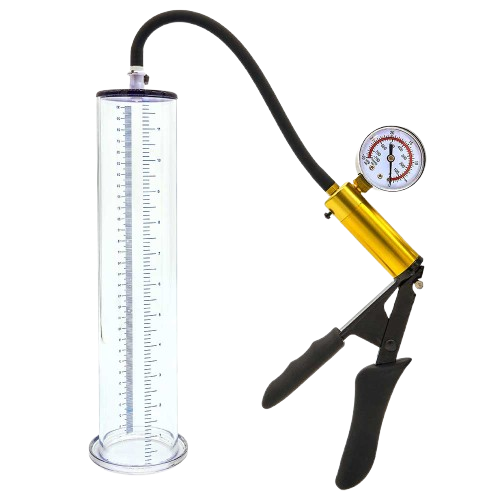
Endurance Pro Pump
Learn MoreRegular price $75.99 - $106.99Unit price per -
Excelsior Smart Electric Vacuum Therapy Device
Learn MoreRegular price $135.99 - $159.99Unit price perSale -
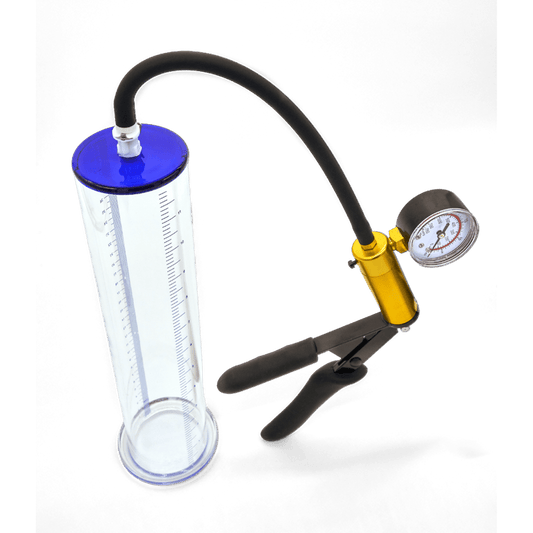
The Champion Pump
Learn More$69.99 Regular price


What Should You Do Now?
Understanding the mechanism does not replace a diagnosis, but it changes the quality of the conversation you can have when you talk to your doctor about one. If what you have read matches a recognizable pattern: a sudden change tied to a stressful period, a gradual decline alongside diabetes or high blood pressure, or a change dating from a surgery, then that pattern is useful clinical information, and saying so directly is a faster route to the right assessment than describing the symptom alone.
Two things are worth acting on regardless of which pattern fits. Erectile dysfunction that appeared without an obvious explanation is a reason to have cardiovascular risk assessed, and erectile dysfunction of any origin tends to be more treatable earlier than later, because erectile tissue deteriorates in the absence of regular erections. If you’re not sure which applies to you, a consultation with a physician remains the most reliable way to identify the specific mechanism at work.
References
Mulhall JP, Luo X, Zou KH, Stecher V, Galaznik A. "Relationship between age and erectile dysfunction diagnosis or treatment using real-world observational data in the USA." International Journal of Clinical Practice, 2016. https://pmc.ncbi.nlm.nih.gov/articles/PMC5540144/
Panchatsharam PK, Durland J, Zito PM. "Physiology, Erection." StatPearls [Internet]. StatPearls Publishing, 2023. https://www.ncbi.nlm.nih.gov/books/NBK513278/
Shafik A, Shafik I, El Sibai O, Shafik AA. "On the pathogenesis of penile venous leakage: role of the tunica albuginea." BMC Urology, 2007. https://pmc.ncbi.nlm.nih.gov/articles/PMC1995196/
Andersson KE. "PDE5 inhibitors – pharmacology and clinical applications 20 years after sildenafil discovery." British Journal of Pharmacology, 2018. https://pmc.ncbi.nlm.nih.gov/articles/PMC6003652/
Dean RC, Lue TF. "Physiology of penile erection and pathophysiology of erectile dysfunction." Urologic Clinics of North America, 2005. https://pmc.ncbi.nlm.nih.gov/articles/PMC1351051/
Shoshany O, Katz DJ, Love C. "Much more than prescribing a pill – Assessment and treatment of erectile dysfunction by the general practitioner." Australian Family Physician, 2017. https://www.racgp.org.au/afp/2017/september/much-more-than-prescribing-a-pill
Pozzi E, Fallara G, Capogrosso P, et al. "Primary organic versus primary psychogenic erectile dysfunction: Findings from a real-life cross-sectional study." Andrology, 2022. https://onlinelibrary.wiley.com/doi/10.1111/andr.13212
Wespes E. "Smooth muscle pathology and erectile dysfunction." International Journal of Impotence Research, 2002. https://www.nature.com/articles/3900792
El-Sakka AI. "Reversion of penile fibrosis: Current information and a new horizon." Arab Journal of Urology, 2011. https://pmc.ncbi.nlm.nih.gov/articles/PMC4149188/
Andersen ML, Tufik S. "The role of sleep stages in the regulation of erectile function: impacts of REM sleep fragmentation." International Journal of Impotence Research, 2026. https://www.nature.com/articles/s41443-026-01240-9
Ferrini MG, Kovanecz I, Sanchez S, Umeh C, Rajfer J, Gonzalez-Cadavid NF. "Fibrosis and loss of smooth muscle in the corpora cavernosa precede corporal veno-occlusive dysfunction (CVOD) induced by experimental cavernosal nerve damage in the rat." The Journal of Sexual Medicine, 2009. https://pmc.ncbi.nlm.nih.gov/articles/PMC2756287/
Johns Hopkins Medicine. "Erectile Dysfunction." Johns Hopkins Medicine, [n.d.]. https://www.hopkinsmedicine.org/health/conditions-and-diseases/erectile-dysfunction
Tang Z, Li D, Zhang X, Yi L, Zhu X, Zeng X, Tang Y. "Comparison of the simplified International Index of Erectile Function (IIEF-5) in patients of erectile dysfunction with different pathophysiologies." BMC Urology, 2014. https://pmc.ncbi.nlm.nih.gov/articles/PMC4094415/
Glina FR, Glina S. "Organic or psychological? It does matter!" International Brazilian Journal of Urology, 2022. https://pmc.ncbi.nlm.nih.gov/articles/PMC9060174/
Inman BA, St Sauver JL, Jacobson DJ, McGree ME, Nehra A, Lieber MM, Roger VL, Jacobsen SJ. "A population-based, longitudinal study of erectile dysfunction and future coronary artery disease." Mayo Clinic Proceedings, 2009. https://pmc.ncbi.nlm.nih.gov/articles/PMC2664580/
Stein RA. "Endothelial dysfunction, erectile dysfunction, and coronary heart disease: the pathophysiologic and clinical linkage." Reviews in Urology, 2003. https://pmc.ncbi.nlm.nih.gov/articles/PMC1502382/
Nehra A, Jackson G, Miner M, et al. "The Princeton III Consensus recommendations for the management of erectile dysfunction and cardiovascular disease." Mayo Clinic Proceedings, 2012. https://pmc.ncbi.nlm.nih.gov/articles/PMC3498391/
Pastuszak AW. "Current Diagnosis and Management of Erectile Dysfunction." Current Sexual Health Reports, 2014. https://pmc.ncbi.nlm.nih.gov/articles/PMC4394737/
Dhaliwal A, Gupta M. "PDE5 Inhibitors." StatPearls [Internet]. StatPearls Publishing, 2023. https://www.ncbi.nlm.nih.gov/books/NBK549843/
Leslie SW, Sooriyamoorthy T. "Erectile Dysfunction." StatPearls [Internet]. StatPearls Publishing, 2024. https://www.ncbi.nlm.nih.gov/books/NBK562253/
